
Thomas Randolph, 1st Earl of Moray, was a Scottish military commander, diplomat and guardian of the kingdom during the Wars of Independence. A nephew of Robert the Bruce, he helped recover Edinburgh Castle in 1314, commanded spearmen at Bannockburn and later governed during the childhood of David II.
His career was not a simple sequence of unbroken loyalties and battlefield victories. Capture, a temporary change of allegiance, reconciliation and political responsibility all shaped it. He became important because he could serve the Scottish crown in several settings: an assault on a fortress, a field army, negotiations abroad and the administration of a kingdom without an adult king.
Thomas Randolph at a glance
| Detail | Historical record |
|---|---|
| Full historical identification | Thomas Randolph, 1st Earl of Moray |
| Country | Scotland |
| Connection to Robert I | Nephew through the king’s half-sister |
| Major military achievements | Edinburgh Castle and Bannockburn, 1314 |
| Diplomatic work | Negotiations involving France, England and the papacy |
| Later office | Guardian of Scotland for David II, 1329–1332 |
| Death | July 20, 1332 |
| Burial | Dunfermline Abbey |
Family background and relationship to Robert the Bruce
The Oxford Dictionary of National Biography identifies Randolph as the son of Sir Thomas Randolph of Stichill in Roxburghshire. His mother was a daughter of Marjory, Countess of Carrick, from her marriage to Adam of Kilconquhar. She was therefore Robert I’s half-sister.
This relationship explains the familiar description of Randolph as the king’s nephew. It did not make him the heir to the throne. His later guardianship was a responsibility exercised on behalf of a young monarch, rather than a royal title held in his own right.
The distinction matters because noble kinship and royal succession were related but separate questions. Randolph belonged to the network surrounding the crown, while his military and diplomatic service helped determine the influence he exercised within it.
Methven, capture and changing allegiance
Randolph’s early career took place during an unstable period in the struggle between Robert Bruce and the English crown. The University of Strathclyde’s account records his capture at Methven in 1306 and subsequent service on the English side, possibly to preserve his life.
He was captured again by Scottish forces at Line Water in 1308. Accounts describe friction with Robert before reconciliation. By 1314 he had become a major contributor to the king’s military efforts.
Those changes complicate a purely heroic portrait, but they also make the later relationship more significant. Robert entrusted him with important commands after a period in which his allegiance had been uncertain. His place among the king’s closest supporters was therefore established through subsequent service as well as family connection.
The capture of Edinburgh Castle in 1314
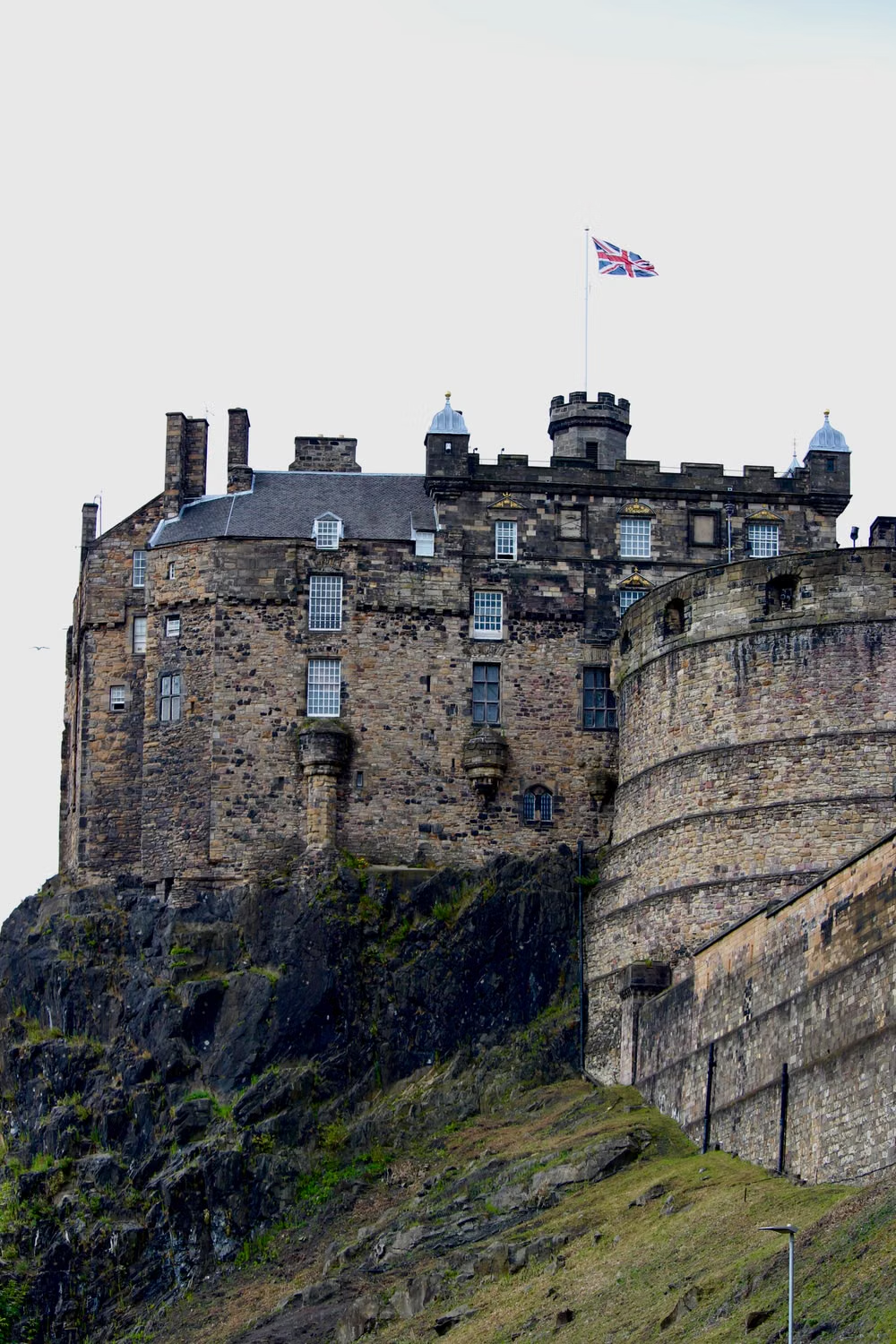
Randolph’s most celebrated operation was the recovery of Edinburgh Castle on March 14, 1314. The fortress’s position on Castle Rock made a direct assault difficult. Its capture depended on surprise and a small force reaching defenses that appeared protected by the terrain.
Historic Environment Scotland’s study of the medieval documents compares accounts of the operation. The sources agree on a siege, an ascent of the rock and the subsequent destruction of the fortifications. They differ over details of the route and the diversion used to distract the defenders.
This is one reason to distinguish the securely recorded result from every dramatic detail of its retelling. Randolph’s force succeeded against a substantially larger garrison, but the precise reconstruction of the climb remains a historical question.
The destruction afterward was deliberate. Holding every recovered fortress could stretch Scottish resources, while an intact castle might again become a base for an English garrison. Removing its defensive usefulness served the wider campaign even though it meant damaging a stronghold the Scots had just won.
Bannockburn: stopping the cavalry
Only a few months later, Randolph played a major role at Bannockburn. The National Trust for Scotland’s battlefield guide places his spearmen near St Ninians on June 23, 1314, confronting cavalry led by Clifford and Beaumont.
His troops fought in a schiltron, a close formation of spearmen. The English horsemen were unable to break them and were forced back. Some reached Stirling Castle, while others withdrew, were killed or were captured.
The immediate strategic question concerned access to Stirling. The castle was under siege, and an agreement over its surrender had helped bring the armies into confrontation. Preventing cavalry from reaching it was therefore part of the larger battle, not an isolated display of courage.
The following day’s Scottish victory also depended on terrain, movement and the coordination of different formations. Randolph commanded an important part of that army. His contribution deserves recognition without attributing the whole result to one commander.
War after Bannockburn
Bannockburn did not bring an immediate end to the conflict. Randolph remained active in campaigns involving Ireland and northern England. His career increasingly overlapped with that of Sir James Douglas, another of Robert’s principal commanders.
The 1911 Encyclopaedia Britannica account describes his participation in Edward Bruce’s Irish expedition and later operations with Douglas. It also records their involvement at Berwick and in raids into northern England.
These campaigns carried the war beyond a single defensive victory. They put pressure on English resources and demonstrated that Scottish armies could operate outside Scotland. They also caused destruction for communities caught in their path. A balanced account can recognize military effectiveness while acknowledging that medieval raiding was devastating for civilians.
The Declaration of Arbroath and diplomatic recognition
Randolph’s importance was political as well as military. His name appears near the beginning of the Declaration of Arbroath’s text, identifying him as Earl of Moray and lord of Man and Annandale.
National Records of Scotland explains that the April 6, 1320 letter asked Pope John XXII to recognize Scottish independence and Robert as the lawful king. It formed part of a diplomatic effort at a time of difficult relations with the papacy.
The document was authenticated with seals, rather than signatures in the modern sense. Describing Randolph simply as someone who signed a modern-style declaration can therefore obscure how the document worked.
Its purpose also shows why battlefield success alone was insufficient. Robert’s government sought recognition beyond Scotland, including from an authority whose decisions mattered throughout medieval Europe. Randolph’s standing placed him among the nobles publicly associated with that effort.
Diplomacy in the 1320s and the earldom of Moray
A study published by the Society of Antiquaries of Scotland describes Randolph’s diplomatic journeys to France and his dealings with the papacy. It also places his earldom within the substantial landed authority he exercised in northern Scotland.
The confirmation of his Moray lands in 1324 included forests around several important northern centres. Such rights were part of the practical power attached to a medieval earldom, rather than merely a decorative title.
He subsequently concluded an alliance with France at Corbeil in 1326. The older Dictionary of National Biography traces the combination of military pressure, truces and negotiations that characterized these years.
His duties were therefore unusually broad. The same nobleman remembered for climbing toward a castle also represented the crown in discussions whose outcomes depended on legal standing, alliances and recognition.
Guardian of Scotland under David II
Robert I died in 1329, leaving his young son David II as king. Randolph became guardian of Scotland, carrying responsibility for government while the monarch was a child.
The office linked the survival of Robert’s settlement to the management of its succession. A successful reign could still leave a vulnerable kingdom if a minority created opportunities for rival claimants or foreign intervention. Randolph’s appointment reflects the confidence placed in him at this critical stage.
He held the guardianship until his death in 1332. His record is consequently broader than that of a battlefield lieutenant: for those final years, he helped maintain royal government when the king could not yet exercise adult authority.
| Year | Event | Significance |
|---|---|---|
| 1306 | Captured at Methven | Early disruption of his service to Robert |
| 1308 | Captured by Scottish forces | Preceded reconciliation with the king |
| 1314 | Edinburgh Castle and Bannockburn | Major military achievements |
| 1320 | Named in the Declaration of Arbroath | Association with the diplomatic case for independence |
| 1326 | Alliance at Corbeil | Diplomatic service in France |
| 1329–1332 | Guardian of Scotland | Government during David II’s childhood |
Frequently asked questions
Who was Thomas Randolph, 1st Earl of Moray?
He was a medieval Scottish commander, diplomat and guardian of the kingdom, closely associated with Robert the Bruce.
How was he related to Robert the Bruce?
His mother was Robert’s half-sister. Randolph was the king’s nephew, but that relationship did not make him the heir.
Why is he famous for Edinburgh Castle?
He led the successful Scottish surprise attack of March 14, 1314. The fortifications were subsequently demolished to prevent English reoccupation.
What did he do at Bannockburn?
He commanded spearmen who resisted English cavalry near St Ninians on June 23, 1314, and held an important command in the main battle.
Was Thomas Randolph king of Scotland?
No. He governed as guardian for the young David II after Robert I’s death in 1329.
When did he die?
He died on July 20, 1332 and was buried at Dunfermline Abbey. Stories alleging poisoning do not establish a proven cause of death.
Who was his wife?
He married Isabella Stewart. Their children included the subsequent earls Thomas and John and Agnes, remembered for the defense of Dunbar Castle.

Thomas Andrew is the founder of Odubio.com, a digital platform sharing inspiring biographies, news, and stories about global icons and achievers.