
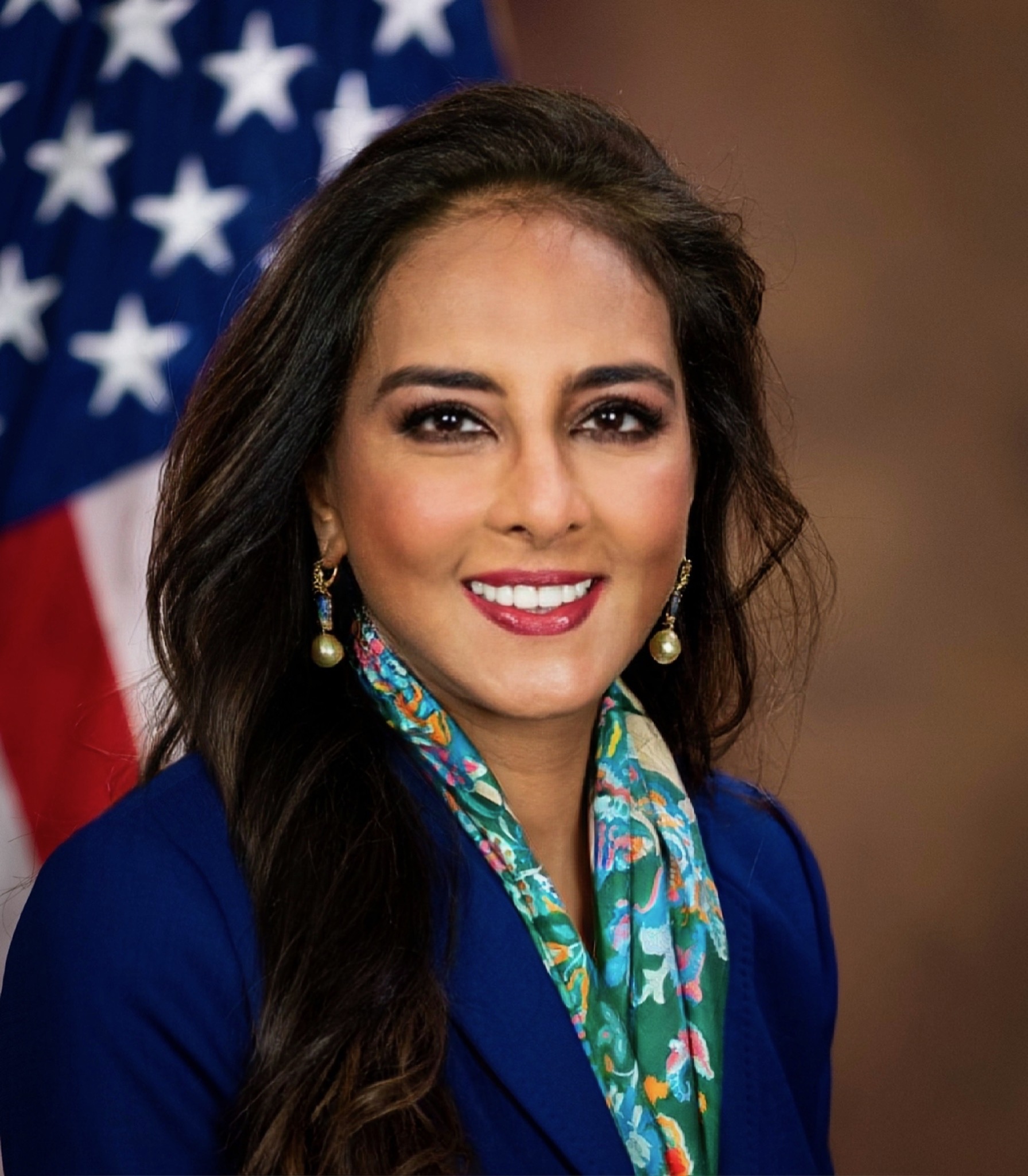
Harmeet K. Dhillon is an American lawyer whose career spans commercial litigation, constitutional cases, Republican politics and federal law enforcement. She founded Dhillon Law Group and the Center for American Liberty before serving as assistant attorney general for the Justice Department’s Civil Rights Division during 2025–2026.
As of November 24, 2026, that Justice Department position is a former role. Dhillon resigned on November 5 after leading a substantial and contested change in the division’s priorities. Her biography therefore involves both a long private legal career and a shorter period exercising federal enforcement authority.
Harmeet Dhillon at a glance
| Detail | Verified information |
|---|---|
| Full name | Harmeet Kaur Dhillon |
| Born | October 2, 1968, Chandigarh, India |
| Age | 58 as of November 24, 2026 |
| Undergraduate degree | Dartmouth College, classical studies, 1989 |
| Law degree | University of Virginia, JD, 1993 |
| Federal clerkship | Judge Paul V. Niemeyer, Fourth Circuit |
| Private practice | Founder of Dhillon Law Group |
| Nonprofit | Founder of the Center for American Liberty, 2018 |
| Justice Department | Confirmed April 3, 2025; sworn in April 7; resigned November 5, 2026 |
Early life and education
Dhillon was born in Chandigarh, India. Her family lived in London and New York before settling in North Carolina. The Justice Department’s archived biography describes that background, her education and her later legal work.
She studied classical studies at Dartmouth College and edited The Dartmouth Review. She then attended the University of Virginia School of Law, where she served on the law review’s editorial board. Her training therefore combined a humanities education with the research and argument central to legal practice.
Her public Senate Judiciary Committee questionnaire records Dartmouth attendance from 1985 to 1989 and law school from 1990 to 1993. It also lists a period as an assistant editor at Policy Review and a summer reporting on school boards before law school. Writing and public affairs were part of her experience before she became a practicing attorney.
Clerkship and work at major law firms
After law school, Dhillon clerked for Judge Paul V. Niemeyer on the U.S. Court of Appeals for the Fourth Circuit in 1993–1994. A federal appellate clerkship involves close work with legal briefs, precedents and judicial reasoning. It provided experience inside a court before she returned to representing clients.
Her questionnaire lists subsequent work at Shearman & Sterling, Sidley Austin, Cooley Godward and Orrick. Her practice took her through New York, London and the San Francisco Bay Area. This was a substantial private-practice foundation before she became widely known for political litigation.
The distinction matters because her public profile can be dominated by a small number of high-profile disputes. Her professional history also includes business clients, contractual questions and the ordinary demands of managing litigation across courts and jurisdictions.
Building Dhillon Law Group
Dhillon’s law firm biography dates the establishment of her own firm to 2006. It describes a practice covering commercial litigation and arbitration, trade secrets, intellectual property, employment disputes and First Amendment issues.
These areas involve different kinds of legal problems. A commercial dispute may concern an agreement between businesses, while a speech case can involve constitutional protections or claims about reputation. Election work may address compliance, ballot descriptions and campaign communications.
The firm’s description is useful for identifying practice areas and professional background. It is a promotional source, however, so claims about the quality or success of its representation are not treated here as an independent ranking. A lawyer’s role in a case also needs to be distinguished from the court’s eventual decision.
Constitutional litigation and the Center for American Liberty
In 2018, Dhillon founded the Center for American Liberty. The organization’s mission statement identifies it as a nonprofit using litigation to advance its interpretation of civil liberties and oppose discrimination. Its priorities reflect an advocacy position rather than a politically neutral survey of legal disputes.
The nonprofit is distinct from her private law firm. A founder can be connected with both organizations, but they have separate institutional purposes. The center’s public account emphasizes a network of attorneys and cases involving speech and other individual rights.
A 2021 biography submitted to Congress describes her constitutional practice as including free speech, due process and equal protection questions. It also records representation of candidates, ballot measure proponents and political parties.
That record helps explain the connection between her legal and political visibility. Cases involving government restrictions or election rules attract attention beyond the immediate clients because their outcomes can affect other people and institutions. Even so, the existence of a lawsuit establishes what was challenged, not that every argument made in it was accepted.
Republican political involvement
Dhillon became a prominent Republican lawyer and served as a Republican National Committee member from California. Her public profile expanded through legal commentary and work in politically significant disputes.
She also sought the Republican National Committee chairmanship, losing to Ronna McDaniel in January 2023. Associated Press reporting on her later career places that contest within her rise as a national conservative figure. The candidacy was a party leadership effort, separate from an election to public office.
Party activism and legal representation can overlap, but they are different responsibilities. A private lawyer represents clients within professional rules. A federal official, by contrast, exercises government authority and must work within the statutes and institutional duties of that office.
Confirmation and Civil Rights Division appointment
President Donald Trump selected Dhillon to lead the Civil Rights Division. The Senate confirmed her on April 3, 2025, by a vote of 52 to 45. The official roll call documents the vote.
Attorney General Pam Bondi swore her in on April 7. The department’s swearing-in announcement establishes the start of that appointment. Confirmation and taking the oath are related but separate events, which is why both dates appear in her chronology.
Leading the division involved moving from selecting cases for private clients and an advocacy organization to setting priorities for a federal enforcement unit. The change increased both her institutional authority and public scrutiny of the choices made under her leadership.
Policy changes, criticism and resignation
During Dhillon’s tenure, the division shifted toward administration priorities involving diversity initiatives, universities, voter information and gun rights. Reuters’ November 2026 report describes the changes and the departure of career staff.
Dhillon defended the shift as enforcing civil rights according to the administration’s priorities. Critics argued that it weakened the division’s established work. The disagreement concerned what enforcement should emphasize and how the department used its authority, rather than a single case alone.
ABC News reported that the division rolled back police-related agreements, investigated universities and pursued voter-roll lawsuits. The report also described a large staff exodus and criticism from former division leadership. These accounts make clear that her tenure was consequential and disputed.
Her resignation was announced on November 5, 2026. Reuters reported that she said she had informed the White House of her plans in October, and that her spokesperson said she would return to her firm. The timing after the midterms is part of the chronology; it does not establish a single undisputed motive for the decision.
Career timeline
| Period | Milestone | Career stage |
|---|---|---|
| 1989 | Dartmouth degree | Classical studies |
| 1993 | University of Virginia JD | Legal education |
| 1993–1994 | Fourth Circuit clerkship | Federal appellate experience |
| 1994 onward | Major law firm practice | Litigation in several professional settings |
| 2006 | Founded her law firm | Independent private practice |
| 2018 | Founded Center for American Liberty | Nonprofit constitutional advocacy |
| January 2023 | RNC chairmanship contest | National party leadership bid |
| April 2025 | Confirmed and sworn in at DOJ | Federal enforcement leadership |
| November 2026 | Resigned from the Civil Rights Division | End of federal appointment |
Understanding her professional record
Dhillon’s career brings together three settings: private practice, nonprofit advocacy and government. In each, the legal tools may include litigation, but the client, purpose and source of authority differ. Keeping those distinctions visible gives a clearer picture of her work than treating every case as part of the same institution.
Her lasting public significance lies in that movement from advocating a particular view of civil liberties to leading a federal division responsible for enforcing civil rights law. Assessing the record requires attention to documented decisions, court outcomes and institutional effects, alongside her own explanation of her priorities.
Frequently asked questions
Who is Harmeet Dhillon?
She is a lawyer, law firm founder and former assistant attorney general who led the Justice Department’s Civil Rights Division during 2025–2026.
How old is Harmeet Dhillon?
She is 58 as of November 24, 2026. Her public Senate questionnaire records her birth on October 2, 1968.
Where did she attend college and law school?
She studied classical studies at Dartmouth College and earned her JD at the University of Virginia.
What kind of law does she practice?
Her professional record includes commercial, employment, constitutional and election litigation, with considerable public attention on speech and civil rights disputes.
What is the Center for American Liberty?
It is the nonprofit advocacy organization she founded in 2018. It is separate from Dhillon Law Group.
When did she join the Justice Department?
The Senate confirmed her on April 3, 2025, and she was sworn in on April 7.
Does she still lead the Civil Rights Division?
No. She resigned on November 5, 2026, and the department now lists her in an archived former-official biography.

Thomas Andrew is the founder of Odubio.com, a digital platform sharing inspiring biographies, news, and stories about global icons and achievers.