
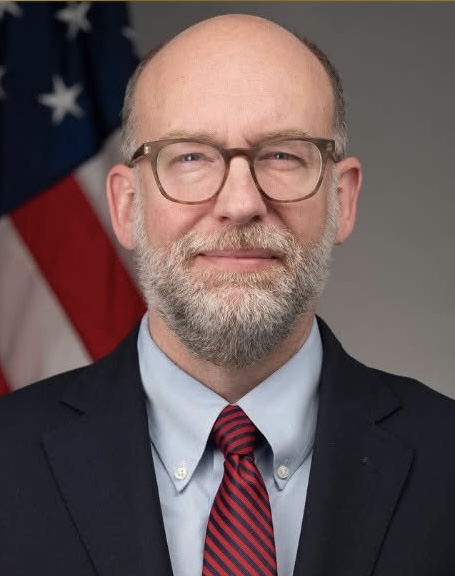
Russell Vought, often called Russ Vought, is director of the White House Office of Management and Budget. He returned to that office in 2025 after serving during President Donald Trump’s first administration. His career combines congressional staff work, conservative advocacy and leadership of an executive-branch office with a central role in presidential budgeting and management.
Vought’s public profile is connected with debates about the size of government and the authority of the presidency. Understanding his biography requires more than identifying a party or political label: it means following the positions he held, the policy organizations he helped lead and the difference between proposing a programme and putting it into effect. This profile is reviewed as of November 24, 2026.
Russell Vought biography at a glance
| Detail | Information |
|---|---|
| Also known as | Russ Vought |
| Principal office | Director, Office of Management and Budget |
| Undergraduate education | Wheaton College, Illinois, BA, 1998 |
| Legal education | George Washington University Law School, JD, 2004 |
| First director confirmation | July 20, 2020 |
| Return confirmation | February 6, 2025 |
| Policy organization | Founder of the Center for Renewing America |
| Project 2025 contribution | Chapter on the Executive Office of the President |
Education and the route into policy work
Vought earned a bachelor’s degree from Wheaton College in Illinois in 1998 and a law degree from George Washington University in 2004. Those qualifications are recorded in an official biography submitted to Congress.
His career developed around public policy and government rather than electoral office. Law and legislative work provided a foundation for jobs involving how government programmes are authorized, funded and administered. That combination became particularly relevant to his later position at OMB.
A biography of a budget director can easily become dominated by spending totals. The earlier career is important because the office also concerns management and regulatory policy. Vought’s professional progression involved working with political priorities and institutional rules long before his name became closely associated with the federal budget.
Congressional staff roles
Before joining OMB, Vought worked as a legislative assistant to Senator Phil Gramm, executive director of the Republican Study Committee and policy director for the House Republican Conference under Mike Pence. These were staff and organizational roles, not seats he won in Congress.
The positions involved different parts of the congressional environment. A legislative assistant supports an individual senator’s work. A policy role in a House conference or caucus-related organization concerns coordination among lawmakers and the development of shared priorities.
That experience helps explain why Vought’s later executive-branch role involved continuing interaction with Congress. Presidential priorities must move through institutions with their own procedures and authority. Someone familiar with legislative work brings a particular perspective to the negotiations and disputes that arise around a budget request.
It is nevertheless important to keep titles precise. Working for a senator or a congressional group is not the same as serving as an elected senator or representative. Vought’s public influence came through policy and appointed leadership rather than a congressional electoral mandate of his own.
Heritage Action and conservative advocacy
Vought spent seven years as vice president of Heritage Action for America before joining the administration. His congressional biography and the archived first-administration White House profile identify that period in his career.
Advocacy organizations operate differently from government agencies. They can promote proposals, organize support and argue for particular legislative outcomes, but they do not acquire public authority simply by publishing a policy position. That distinction remains relevant to the organizations associated with Vought between his periods in government.
His record shows an ongoing relationship with conservative policy networks. The connection is useful context for his public priorities, but it does not establish that every proposal produced by a related organization became government policy. Specific actions require their own documentary record.
First period at the Office of Management and Budget
Vought served as OMB deputy director and acting director before receiving confirmation as director in July 2020. The Senate’s July 20 roll call records confirmation by 51 votes to 45.
The progression from deputy to acting director to confirmed director explains why several dates appear in accounts of his first tenure. An acting assignment means exercising the office’s responsibilities under a temporary arrangement; a later confirmation is a separate step.
His initial director service came during the final part of Trump’s first presidency. It supplied direct experience leading the office before his return in the second administration. The intervening years involved policy advocacy outside government rather than continuous service as budget director.
The Center for Renewing America and Project 2025
The Center for Renewing America’s own account says Vought founded the organization in 2021. It forms part of the institutional history connecting his two periods at OMB.
He also contributed to Project 2025. The Heritage Foundation’s announcement of its policy volume, Mandate for Leadership: The Conservative Promise, identifies him as the author of its chapter on the Executive Office of the President. The book brought together numerous authors and policy recommendations.
The chapter credit is a specific, verifiable connection. It is more precise than describing him as responsible for every part of a large multi-author project. At the same time, it explains why reporting about his return to government linked his appointment with discussion of the initiative.
A transition blueprint expresses what its contributors want an administration to do. Executive orders, agency actions and legislation are separate forms of evidence about what actually happened. Reading Vought’s career through that distinction allows political ideas and completed government decisions to be discussed without confusing them.
Return to OMB in 2025
The Senate confirmed Vought’s return on February 6, 2025. The official vote record shows 53 in favour and 47 against. It identifies the office directly, providing a reliable appointment date.
Associated Press confirmation coverage placed the vote within the wider debate over his policy agenda and presidential power. That political contest is part of his public biography, while the roll call establishes the completed institutional outcome.
His second appointment was therefore a return to a familiar office in a different presidential term. It should not be merged with the 2020 confirmation or described as his first experience leading OMB.
Career timeline
| Date or period | Milestone | Context |
|---|---|---|
| 1998 | Wheaton College degree | Undergraduate education |
| 2004 | George Washington law degree | Legal training |
| Before OMB | Congressional and Heritage Action roles | Policy development and advocacy |
| July 2020 | Confirmed as OMB director | After deputy and acting service |
| 2021 | Center for Renewing America founded | Work outside government |
| 2023 | Project 2025 policy book published | Executive Office chapter contributor |
| February 2025 | Confirmed again as OMB director | Second Trump administration |
What the budget director actually does
The White House’s OMB mission statement describes work supporting the president’s budget, policy, management and regulatory objectives across the executive branch. Its remit is broader than announcing a proposed spending total once a year.
The office helps coordinate a presidential budget request and the administration’s work with agencies. That request communicates priorities, but it does not by itself enact every spending choice. Congress retains its own lawmaking and appropriations responsibilities.
The distinction was visible in OMB’s May 2025 announcement of the fiscal 2026 discretionary request. It presented a presidential proposal to lawmakers. Calling a requested reduction or increase a completed appropriation would skip the legislative steps required to establish the result.
Vought’s public work also continued into later budget cycles. A House hearing record for April 15, 2026 identifies him as a witness on the president’s fiscal 2027 request. A fiscal year label describes the budget period, which can differ from the calendar year of a hearing or announcement.
Spending authority and the public debate
Debates about executive control of spending involve both policy preferences and legal authority. The Government Accountability Office’s explanation describes the Impoundment Control Act as the main mechanism through which a president seeks to delay or cancel funding enacted by Congress.
That framework is relevant to understanding why a budget director’s decisions can attract scrutiny. An argument that a programme should receive less money is different from a legal determination about whether already enacted funds may be withheld. Assessing a particular action requires its specific facts and current legal record.
This distinction also keeps a biography from becoming either a promotional account or a collection of political accusations. Vought’s stated priorities, his official responsibilities and the rules governing those responsibilities can be described separately.
Earlier CFPB responsibilities
Vought also held an acting assignment at the Consumer Financial Protection Bureau. Its 2026 semiannual report opens with a message from Acting Director Paoletta and refers to Vought’s bureau tenure in the past tense. This profile therefore does not carry that earlier title forward as his current position.
Frequently asked questions
Who is Russell Vought?
He is the director of the Office of Management and Budget and a longtime conservative policy official.
Are Russ Vought and Russell Vought the same person?
Yes. Russ is the shortened form used in many official and organizational references.
Where did he study?
He graduated from Wheaton College in 1998 and George Washington University Law School in 2004.
When did he return as OMB director?
The Senate confirmed his second appointment on February 6, 2025, by 53–47.
What was his Project 2025 role?
He wrote the policy volume’s chapter on the Executive Office of the President.
Was he an elected member of Congress?
No. The congressional positions described in his biography were staff and policy leadership roles.
Does a presidential budget request automatically become law?
No. A request sets out administration priorities; enacted spending requires the relevant legislative process.

Thomas Andrew is the founder of Odubio.com, a digital platform sharing inspiring biographies, news, and stories about global icons and achievers.