
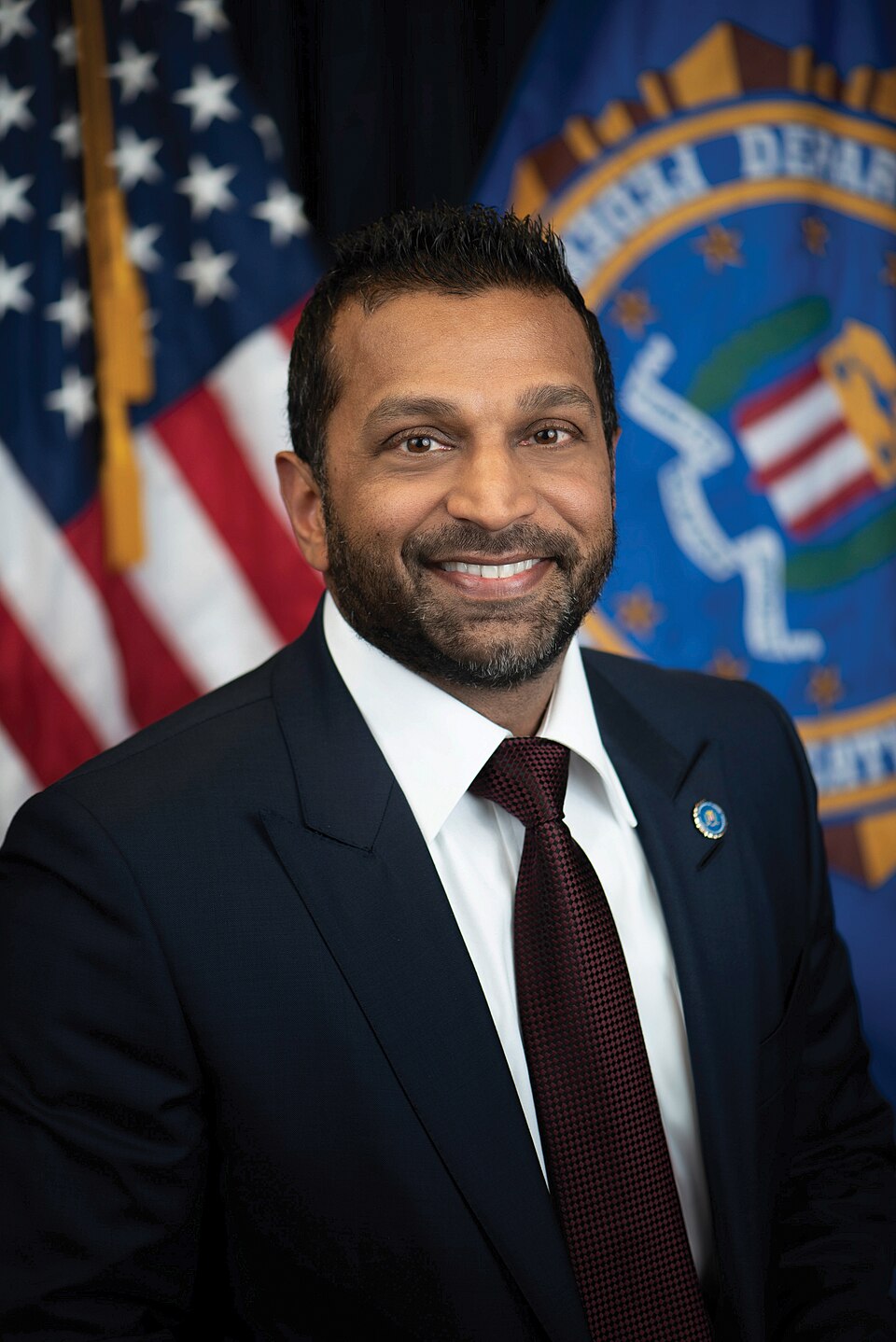
Kash Patel’s net worth was estimated at about $6 million by Forbes on May 12, 2026. That is a dated journalistic valuation, not an official statement of his exact current wealth. Public disclosures provide information about assets, income and employment agreements, but their reporting ranges cannot simply be read as a precise personal balance sheet.
Patel is the FBI director, following a career that included public defense, national-security prosecution, congressional work and executive-branch appointments. His later private-sector activities included consulting, media appearances and books. Those different roles help explain interest in his finances while making the dates and reporting categories especially important.
Kash Patel’s finances at a glance
| Measure | What is documented |
|---|---|
| Forbes estimate | About $6 million on May 12, 2026 |
| Disclosure asset range | ProPublica reports $4.1 million to more than $15 million |
| Consulting business | Trishul LLC |
| Education | University of Richmond, 2002; later legal training |
| Senate confirmation | February 20, 2025 |
| Swearing-in | February 21, 2025 |
| Public office | Ninth director of the FBI |
| Meaning of the estimate | Publisher analysis, not a verified live account balance |
Where the net-worth estimate comes from
Forbes’s May 2026 analysis examined Patel’s finances and his transition from private income back into government. It reported consulting, speaking, media and publishing activity before he became director.
The article’s approximately six-million-dollar estimate belongs to that analysis and publication date. It should not be rewritten as an exact amount that Patel personally certified. Another publisher may use a different method or reporting period, which is one reason celebrity-style wealth figures can disagree.
The most useful answer preserves the source and its limitations. A clearly attributed estimate can provide context, while the underlying disclosures answer narrower questions about reported holdings and income. Neither should be made more precise than the evidence allows.
Assets, income and net worth are different measures
Net worth means assets after liabilities. Income concerns money received during a period. A profitable year can affect wealth, but its receipts do not automatically equal everything a person owns after debts.
For example, a consulting payment is an income event. Cash retained from it may later appear among assets, while spending or obligations can change the resulting balance. Adding the original income to every later asset value can count the same money more than once.
This is why a biography should not add every number associated with a public figure and call the result net worth. Company receipts, personal compensation, stock interests and liabilities each need their own treatment. The distinctions make financial reporting more useful than a large but unsupported total.
What the disclosure database shows
ProPublica’s disclosure database records reported asset values from $4.1 million to more than $15 million. The heading describes asset-value ranges, not a certified net-worth interval.
The database identifies Trishul LLC as a consulting business and lists media-related income, royalties and other financial interests. It also separates employment agreements from income and holdings. That structure is important: a promise about the future of a business is different from a record of money received in an earlier reporting period.
A disclosed outside organization should not automatically be described as a current employer during government service. The relevant dates, resignation commitments and activity restrictions need to be read alongside the organization’s name.
Why a reporting range is not an exact valuation
The Office of Government Ethics public disclosure form separates categories such as assets, income, agreements and liabilities. Its reporting format is designed for disclosure obligations, rather than to produce a single celebrity wealth number.
If an asset is listed in a band, the upper boundary is not necessarily its exact value. A holding reported between one million and five million dollars could fall at different points within that interval. Choosing a midpoint or endpoint creates an estimate that should remain identified as such.
Comparing reports also requires matching the reporting periods and categories. A document prepared before an appointment may describe holdings that are later sold or activities that are later discontinued. It cannot automatically establish an unchanged financial position for every subsequent month.
Consulting and the return to government
Patel’s disclosed employment agreement states that Trishul would be inactive during his appointment and that outstanding client fees would be fixed before he entered government service. The database also records arrangements concerning his media and copyright-licensing business.
Those commitments are relevant because they explain how pre-appointment activities were to be handled. A commitment is not by itself proof of every later compliance step. Equally, a historical income entry is not evidence that the activity continued unchanged while he served as director.
Forbes’s report discusses the difference between his private earnings and government pay. That comparison concerns compensation across different roles, rather than showing that a federal salary alone created his entire estimated wealth.
Education and the beginning of a legal career
The FBI’s official biography records Patel’s 2002 graduation from the University of Richmond with a bachelor’s degree in criminal justice and history. He subsequently earned a law degree and a certificate in international law from University College London.
Forbes identifies his law school as Pace and the graduation year as 2005. A law degree and an international-law certificate are distinct qualifications. Neither should be casually replaced with an unsupported degree title from a different institution.
Patel began as a public defender in Florida in 2005. That work involved representing defendants, rather than serving as a prosecutor. The distinction matters when tracing the later move into federal national-security cases: both involve criminal justice, but the professional responsibilities are different.
Prosecution, Congress and executive appointments
His official biography dates his move to the Department of Justice as a national-security prosecutor to 2014. He later worked as national-security adviser and senior counsel for the House Permanent Select Committee on Intelligence.
During the first Trump administration, his posts included work at the National Security Council and in the intelligence community. These were separate appointments before his eventual FBI nomination. Describing that sequence is more accurate than treating his government career as one uninterrupted period leading the bureau.
An official biography is a primary record of how an institution describes its leader’s background. Evaluative claims about contested investigations require additional evidence and attribution. This profile uses the chronology of positions without adopting political characterizations as independent findings.
Confirmation and the February 2025 oath
The Senate confirmed Patel on February 20, 2025. The official Congressional Record preserves the 51–49 vote on his nomination.
The FBI’s swearing-in report records the oath on February 21, the following day. That is why both dates appear in accounts of his arrival: the confirmation vote and the oath were different events.
The FBI’s leadership FAQ identifies him as the current director at this November 2026 review. It explains that the director is appointed by the president and confirmed by the Senate for a term not exceeding ten years. The term framework should not be treated as an unconditional promise of service until a particular future date.
| Period | Documented stage | Context |
|---|---|---|
| 2002 | University of Richmond graduation | Criminal justice and history |
| 2005 | Legal career begins | Public-defense work in Florida |
| 2014 | Department of Justice prosecution work | National-security cases |
| Later government service | Congressional and executive-branch posts | Separate from the later FBI directorship |
| Before FBI appointment | Consulting, media and publishing | Income with its own reporting periods |
| February 2025 | Confirmed and sworn in | Two events on successive days |
| May 2026 | Forbes wealth analysis | Dated estimate rather than exact current total |
Attorney General Pamela Bondi administered the oath in Washington, according to the bureau’s report. That ceremony records the beginning of the leadership period, while the Senate roll call records the preceding constitutional confirmation step. Neither document is a financial valuation; each supports a different part of the biography.
Reading financial claims responsibly
Patel’s finances are a legitimate subject of public reporting because disclosures help readers understand interests connected with senior government service. The evidence should still be handled precisely. An asset listing is not, by itself, proof of wrongdoing, and a publisher’s estimate is not a government audit.
The strongest account preserves those boundaries: identify the estimate, name its source, distinguish assets from income and attach dates to outside work. That approach answers the wealth question while leaving unsupported claims about private accounts or future earnings out of the biography.
Frequently asked questions
What is Kash Patel’s net worth?
Forbes estimated about $6 million in May 2026. An exact current total is not established by that estimate.
Does the disclosure asset range equal net worth?
No. An asset range does not by itself account for every liability or establish an exact balance.
What was Trishul LLC?
It was Patel’s consulting business. His disclosed agreement said it would be inactive during his appointment.
Where did he study?
He graduated from the University of Richmond in 2002 and later completed legal training, including a law degree from Pace.
When was he confirmed?
The Senate confirmed him on February 20, 2025, by 51 votes to 49.
When did he take the oath?
He was sworn in as the ninth FBI director on February 21, 2025.
Does a past business role mean it continues today?
No. Disclosure dates and employment agreements must be checked before calling an outside position current.

Thomas Andrew is the founder of Odubio.com, a digital platform sharing inspiring biographies, news, and stories about global icons and achievers.