
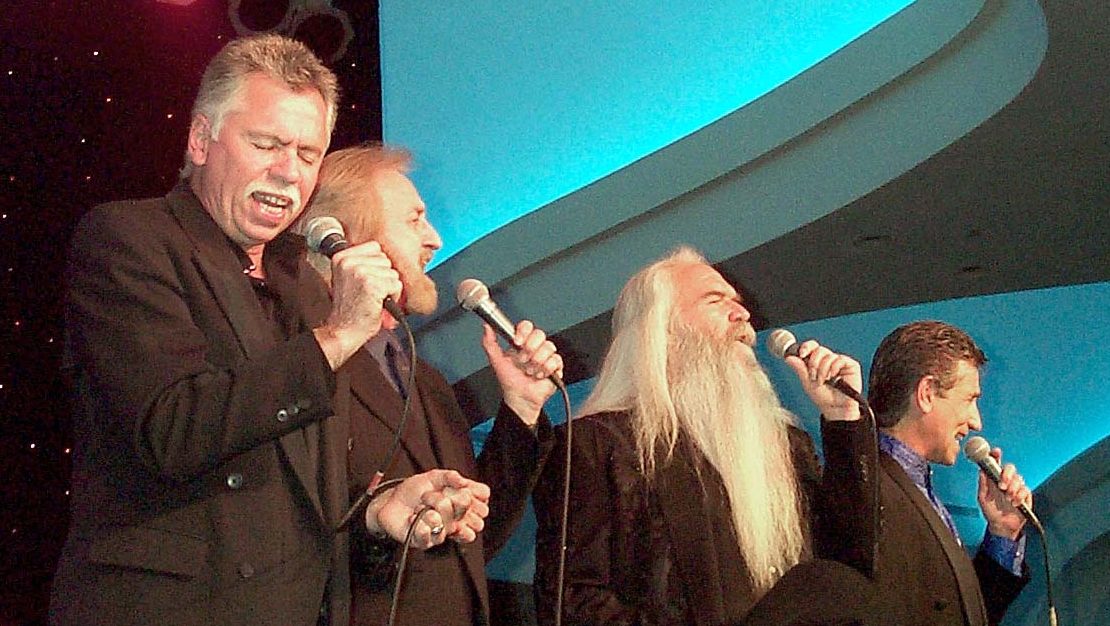
Richard Sterban was singing behind Elvis Presley when he got the chance to join the Oak Ridge Boys. He took the job in 1972. Nine years later, his bass part on “Elvira” turned a few seconds of a country record into the moment audiences waited to sing back.
This Richard Sterban biography follows the singer from a New Jersey Sunday school to the Grand Ole Opry. Sterban died on November 14, 2026, at 83, his family and the band said in a statement reported by the Associated Press.
Richard Sterban at a glance
| Born | April 24, 1943, in Camden, New Jersey |
|---|---|
| Died | November 14, 2026, aged 83 |
| Voice | Bass |
| Best known for | The Oak Ridge Boys and his bass refrain on “Elvira” |
| Joined the Oak Ridge Boys | 1972 |
| Hall of Fame | Inducted with the Oak Ridge Boys in 2015 |
From boy soprano to bass singer
It may be hard to imagine the low voice on “Elvira” singing the highest part in a group, but that is where Sterban started. According to his official band biography, he sang soprano in Sunday school at six. He sang tenor in seventh grade, then returned to school the following year as a bass.
Growing up in southern New Jersey gave him a route into quartet singing far from Nashville. He sang with the Keystones, where he met future Oak Ridge Boys tenor Joe Bonsall. They would eventually work together again, with their voices near opposite ends of the quartet’s range.
What Richard Sterban did with Elvis Presley
Before joining the Oaks, Sterban sang with J.D. Sumner and the Stamps Quartet. The gospel group backed Elvis Presley, giving Sterban the chance to tour and record with him. He also appeared in the concert documentary Elvis on Tour.
Backing Presley and singing in the Oaks called for different kinds of work. With Elvis, the quartet supported a solo star. In the Oak Ridge Boys, the four voices together were the attraction. Sterban later told the story of the move in his memoir, From Elvis to Elvira: My Life on Stage, written with Steven Robinson.
“I wanted to be in the best vocal group in the world.”
Richard Sterban, quoted in his official band biography.
The decision behind his move from Elvis
A Tennessee legislative resolution recognizing Sterban traces the professional steps that preceded the Oaks. It records his move to Nashville in 1970 and his arrival in Presley’s backing group in 1971. The resolution also notes that he had managed a singing group while still in college. His interest in quartet work therefore included organizing a group as well as finding his place within its sound.
That background makes the 1972 decision easier to understand. Presley offered an established, enormous audience. The Oak Ridge Boys offered the possibility of building something as a member of a vocal team. The country breakthrough had not yet happened, so the move was a commitment to the group’s potential rather than a response to “Elvira,” which would come much later.
How the Oak Ridge Boys found their country sound
The Oak Ridge Boys already had a gospel audience when Sterban joined in 1972. Bonsall arrived the following year, completing the best-known lineup with lead singer Duane Allen and baritone William Lee Golden. Sterban anchored the group as its bass singer.
The group’s country breakthrough came with “Y’all Come Back Saloon” in 1977. Listen to how the voices stack up behind the lead: the melody can move freely because the lower parts hold the chord together. The quartet brought that skill from gospel to country, even as its material changed. The Country Music Hall of Fame and Museum traces the transition and the hits that followed.
Why “Elvira” made his voice so recognizable
“Elvira” gives the bass singer a moment to step out from under the harmony. After the bright chorus, Sterban’s deep refrain changes the color of the whole recording. It’s brief, playful, and easy for an audience to recognize on the first listen.
The Oak Ridge Boys’ 1981 recording reached No. 1 on the country chart and No. 5 on the pop chart. In 1982 it won the Grammy for Best Country Performance by a Duo or Group with Vocal. The crossover introduced listeners who might never have sought out a gospel quartet to one of its most distinctive sounds.
What a bass singer contributes to four-part harmony
A quartet’s bass part is often easier to feel than to isolate. Beneath the lead melody and the higher harmonies, it gives the chord a lower boundary and helps the other parts sound connected. Sterban’s career is a particularly clear example of a supporting part becoming central to a group’s public identity. The same singer could reinforce a harmony on one phrase and attract the listener’s attention on the next.
“Elvira” makes that change of emphasis unusually obvious. The contrast between the higher voices and the low answer gives the arrangement much of its playfulness. A listener does not need technical vocabulary to recognize the change. The memorable feature is the relationship between the parts: the bass response works because of the brighter sound that comes before it.
This is also why a recognizable vocal moment should be heard within the entire recording. Sterban’s contribution depends on the timing and blend of the quartet, while the other voices gain a distinctive colour from his presence. Following the movement between lead and harmony gives a richer picture of the group than listening only for one famous refrain.
Three recordings to hear next
- “Y’all Come Back Saloon”: Start here to hear how four-part harmony carries a country story.
- “Elvira”: Listen for the moment the bass goes from supporting the chorus to answering it.
- “Bobbie Sue”: The playful follow-up puts the quartet’s timing in a faster, doo-wop setting.
For a live example, the Hall of Fame’s Oak Ridge Boys profile includes a 1981 performance of “Elvira” and other recordings.
Opry membership and Hall of Fame honors
The Grand Ole Opry welcomed the Oak Ridge Boys as members in 2011. Four years later, Sterban, Allen, Golden, and Bonsall entered the Country Music Hall of Fame together. Both honors recognized a group that had already found more than one audience, moving from gospel stages to country radio and the pop charts.
Sterban also had a long interest in baseball. He was once a part owner of the Nashville Sounds and was involved with the team as an ambassador and broadcaster. It was a second way for Nashville audiences to get to know the voice they recognized from records.
A career with several different milestones
| Year | Milestone |
|---|---|
| 1972 | Joined the Oak Ridge Boys after his work with Presley |
| 1977 | The group broke through on country radio with “Y’all Come Back Saloon” |
| 1981–1982 | “Elvira” became a crossover hit and won a Grammy |
| 2011 | The Oak Ridge Boys became Grand Ole Opry members |
| 2015 | Inducted into the Country Music Hall of Fame with the group |
| 2026 | Died in Hendersonville, Tennessee, at 83 |
The Opry connection stretched beyond induction night
The Opry’s group history places the roots of the Oak Ridge Boys in a wartime gospel quartet, decades before Sterban joined. Its account distinguishes the group’s early appearances from its formal membership on August 6, 2011. Appearing on the programme and being inducted as a member were separate milestones in that long relationship.
That history also explains why the country hits did not erase the gospel side of the quartet. The group’s blend and its stage tradition had developed before its biggest radio records. For a singer who had begun in Sunday school and worked in gospel quartets, the Opry honour brought those strands of his career together.
Later performances and his death in 2026
In its November 2026 memorial announcement, the band said Sterban had stepped away from regular touring for health reasons in May 2025. It also recalled his return to the Grand Ole Opry for performances of “Elvira” in January 2026. Those later appearances belong to a career that continued beyond the era when his most familiar records first became hits.
His family and the group reported that he died in Hendersonville on November 14, 2026, after complications from bronchitis and pneumonia following a long battle with cancer. The announcement described a musician who remained connected to singing, baseball and his Tennessee community. His recordings preserve both the celebrated low refrain and the less conspicuous harmony work that made him an essential member of the quartet.
Frequently asked questions
How old was Richard Sterban when he died?
He was 83. He was born on April 24, 1943, and died on November 14, 2026.
Who sang the deep bass part on “Elvira”?
Richard Sterban sang the distinctive low refrain on the Oak Ridge Boys’ 1981 recording.
Did Richard Sterban sing with Elvis?
Yes. He backed Elvis Presley as part of J.D. Sumner and the Stamps Quartet before joining the Oak Ridge Boys.
Was Richard Sterban the lead singer of the Oak Ridge Boys?
His regular role was bass singer. A featured bass refrain, such as the one in “Elvira,” can stand out without being the main lead vocal throughout the song.
When did the Oak Ridge Boys join the Grand Ole Opry?
Their formal induction date was August 6, 2011. The group had appeared on the Opry long before becoming members.
What is the title of Richard Sterban’s memoir?
It is From Elvis to Elvira: My Life on Stage, written with Steven Robinson. The title follows his move from Presley’s backing group to his long career with the Oaks.
Was he inducted into the Country Music Hall of Fame?
Yes. Sterban entered as a member of the Oak Ridge Boys in 2015, alongside Duane Allen, William Lee Golden and Joe Bonsall.
Keep reading: Explore more musician biographies on Odubio.

Thomas Andrew is the founder of Odubio.com, a digital platform sharing inspiring biographies, news, and stories about global icons and achievers.
[…] The group’s 1977 breakthrough, “Y’all Come Back Saloon,” helped put that change in motion. Then came “Elvira” in 1981, followed by hits such as “Bobbie Sue” and “American Made.” The songs had room for playful vocal turns, but they also depended on the four singers moving together. To hear the other side of the “Elvira” exchange, read Odubio’s Richard Sterban biography. […]