
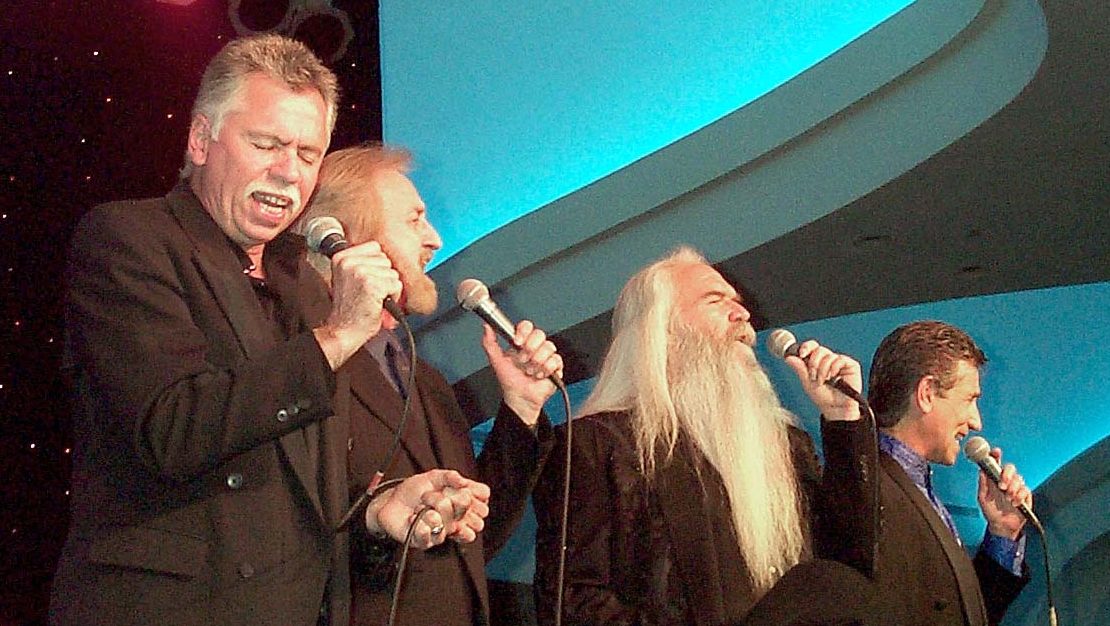
Joe Bonsall was the Oak Ridge Boys’ tenor singer and an author whose work included accounts of his years with the group. His career connected Philadelphia gospel singing with a long run in country music.
Joe Bonsall biography: key facts
| Detail | Information |
|---|---|
| Born | May 18, 1948, Philadelphia |
| Died | July 9, 2024, aged 76 |
| Vocal part | Tenor |
| Joined the Oak Ridge Boys | 1973 |
| Writing | On the Road with the Oak Ridge Boys; I See Myself |
Philadelphia and the move to the Oaks
The Academy of Country Music’s remembrance records Bonsall singing with the Faith Four as a teenager and befriending Richard Sterban in the Philadelphia gospel scene. Bonsall joined the Oak Ridge Boys a year after Sterban.
The Academy traces the group’s country breakthrough to “Y’All Come Back Saloon” in 1977 and its wider crossover success to “Elvira” in 1981. These are milestones in the quartet’s career, rather than a claim that Bonsall performed every lead or wrote every song.
Awards and a writing career
The ACM account documents the group’s 2011 Grand Ole Opry induction and 2015 Country Music Hall of Fame induction. It also records the publication of Bonsall’s touring book in 2015.
His band’s July 2024 statement identifies him as the author of eleven books and describes I See Myself as a forthcoming memoir at that time. The statement provides a dated record of his literary work alongside his singing.
Death and remembrance
The same official statement records Bonsall’s death on July 9, 2024, at 76, from complications of ALS. It is a family and band announcement, not a basis for speculation about private treatment or medical history.
His individual biography sits within the quartet’s longer history. Readers can follow the linked professional records for both the personal timeline and the shared achievements.
The tenor inside a four-part sound
Bonsall’s place in the Oak Ridge Boys was the tenor part, the upper voice in the quartet’s familiar blend. His role is easiest to understand alongside the other parts: Duane Allen’s lead, William Lee Golden’s baritone and Richard Sterban’s bass. The Grand Ole Opry’s group history dates their arrivals to different years, with Bonsall completing that celebrated lineup in 1973.
A harmony group can change its musical direction while retaining the relationships between its voices. The Oaks’ gospel background remained relevant when they reached country audiences. The tenor was one part of that arrangement, but Bonsall also became a prominent onstage communicator. Singing, introducing songs and keeping a show moving are related forms of performance that do not always appear separately in a recording credit.
Elvira and the crossover audience
“Elvira” became a country and pop crossover in 1981. The song was written by Dallas Frazier. In the group’s later official career retrospective, the band identifies Bonsall as the lead singer on the recording and Sterban as the voice of the famous low refrain. It reached No. 1 on the country chart and No. 5 on the pop chart.
That allocation of voices is important. Being the quartet’s regular tenor did not mean Bonsall could never carry a song’s lead. Equally, singing lead on a celebrated recording does not make him its songwriter. The record’s appeal came from the arrangement and the interaction of the voices, with each credit identifying a different contribution.
For a listener beginning with “Elvira,” the next step is to hear the group across a wider selection of recordings. One crossover single can introduce a quartet to a broad audience without representing every style or period in its history.
Which Grammy recognition belongs to Elvira?
The Recording Academy’s group record credits the Oaks with the 1982 award for Best Country Performance by a Duo or Group with Vocal for “Elvira.” The separate songwriting entry lists Frazier as a nominee for Best Country Song. The performance award and the songwriting nomination are different categories.
This distinction prevents two common errors: treating every category as an award won by the singers, or assuming a song’s writer must be the person heard singing it. Bonsall’s professional achievement here was part of the quartet’s recorded performance. The composition belongs to its credited author.
A writer with several kinds of books
The band’s individual biography of Bonsall records the four-book children’s series The Molly Books, first published in 1997. It also identifies G. I. Joe and Lillie: Remembering a Life of Love and Loyalty, his 2003 book about his parents. A song with the same name appeared on the group’s Colors album.
Those projects show that writing was not limited to recollections of concerts. Children’s stories, family biography and a touring memoir address different readers and use different forms. The connection between a book and a song also illustrates how an idea can move across media without becoming the same work in each format.
His writing included the text for the 2004 coffee-table book An American Journey and the short Christmas story An Inconvenient Christmas. These credits give his literary career a chronology that extends well before the final memoir. They also provide a more concrete description than simply calling him a singer who occasionally wrote.
On the Road with the Oak Ridge Boys
The 2015 touring book placed Bonsall’s experience with the quartet into a longer narrative. A touring account can describe the repeated work behind a public concert: travel, schedules, rehearsed material and the relationships that allow a group to perform over many years. It is a different view from a chart table or a studio track list.
The book also offers the perspective of a participant. Readers should recognize that a memoir records an author’s account rather than a neutral transcript of every event. That does not diminish its value; it identifies what kind of evidence it provides. Institutional award records and release credits can be read alongside it to establish dates and shared achievements.
I See Myself and its publication after his death
The original July 2024 announcement called I See Myself forthcoming. The updated band biography records its release in November 2024. The Independent Publishers Group catalogue describes a memoir following his journey from Philadelphia to the Grand Ole Opry. It is therefore a published book, rather than a project that should still be described as awaiting release.
The difference between the announcement date and publication date explains why older reports use the future tense. A later biography should preserve the chronology while updating the status. Bonsall wrote the memoir during his final year, and its publication became part of the continuing record of his work.
Institutional recognition and personal contribution
The Country Music Hall of Fame inducted the quartet in 2015. Its group biography identifies Allen, Golden, Sterban and Bonsall together. This is a group induction, while each member’s profile explains the individual background and contribution.
The Grand Ole Opry dates the group’s membership to August 6, 2011, after many earlier appearances. Performing at the Opry and becoming an Opry member are separate milestones. The membership date recognizes a particular institutional relationship; it should not be mistaken for the first time any member had appeared on its stage.
Retirement and the end of his touring chapter
Bonsall announced retirement from touring in early 2024. The band’s current history records the transition to Ben James as the new tenor. That change belongs to the quartet’s continuing career, while Bonsall’s decades of recordings and writing remain part of its history.
His death announcement identifies complications of ALS as the cause. The public statement is sufficient for the biographical record. Details about private treatment are not needed to understand his work or the family’s announcement. His legacy can be followed through the recordings, books and the accounts of the institutions that recognized the quartet.
Milestones in music and writing
| Year | Milestone | Context |
|---|---|---|
| 1973 | Joined the Oak Ridge Boys | Tenor singer |
| 1981 | Elvira | Lead vocal on crossover recording |
| 1997 | The Molly Books | Children’s writing |
| 2003 | G. I. Joe and Lillie | Book about his parents |
| 2015 | Touring book and Hall of Fame | Writing and group recognition |
| 2024 | I See Myself | Memoir published in November |
A career preserved in recordings and pages
Bonsall left two complementary records of his professional life. The songs preserve the voice and the quartet’s arrangements, while the books preserve his account of the people and experiences around them. A reader can begin with either, then use the other to fill in a different dimension. That combination makes his biography more than a list of shared awards: it includes a distinct writing career alongside the work of a celebrated vocal group.
Frequently asked questions
Who was Joe Bonsall?
He was the Oak Ridge Boys’ longtime tenor singer and an author.
When did he join the group?
He joined in 1973, following Richard Sterban’s arrival the previous year.
Did he sing lead on Elvira?
Yes. The band’s account identifies his lead vocal and Sterban’s bass refrain.
Did Joe Bonsall write Elvira?
No. Dallas Frazier is the credited songwriter.
Was I See Myself published?
Yes. The band biography records its publication in November 2024.
How old was he when he died?
He was 76. His dates were May 18, 1948, to July 9, 2024.
What cause of death did the band announce?
The official announcement identified complications of ALS.

Thomas Andrew is the founder of Odubio.com, a digital platform sharing inspiring biographies, news, and stories about global icons and achievers.
[…] of the quartet’s crossover hits. For the other voices in that lineup, read Odubio’s profiles of tenor Joe Bonsall and bass singer Richard […]