
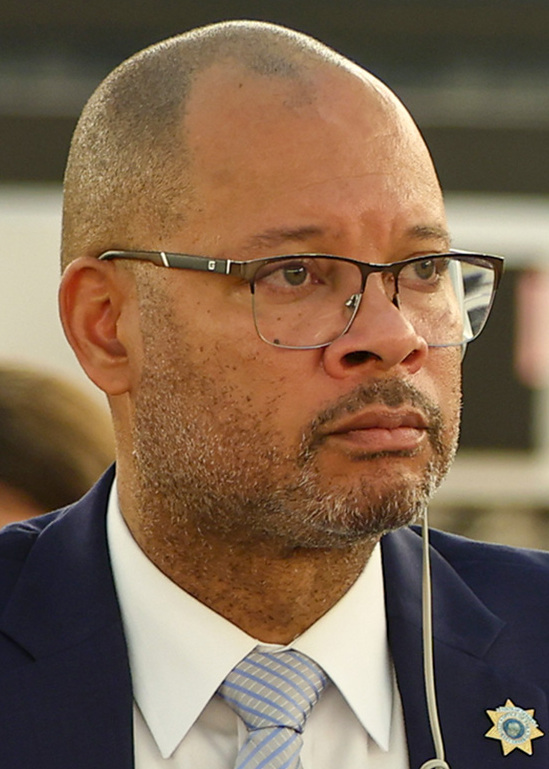
Aaron Ford is Nevada’s attorney general and governor-elect, with a career that connects public education, law and elected leadership. Before holding statewide office, he taught mathematics, practiced as an attorney and led Democrats in the Nevada Senate. His five university degrees reflect an unusually extensive academic path through education and law.
Ford won Nevada’s 2026 governor’s election, defeating incumbent Republican Joe Lombardo. As of November 24, 2026, he is preparing for the governorship while his attorney general service remains the basis of his statewide executive record. The new administration’s future policies should be distinguished from work already completed in earlier offices.
Aaron Ford at a glance
| Detail | Information |
|---|---|
| Full professional name | Aaron D. Ford |
| Birth year and birthplace | 1972, Dallas, Texas |
| Party | Democratic Party |
| Earlier profession | Public school mathematics teacher |
| Universities | Texas A&M, George Washington University and Ohio State |
| Qualifications | Five degrees, including a JD and education doctorate |
| Nevada Senate | District 11, November 2012–December 2018 |
| Attorney general | 34th holder of the office; took office January 7, 2019 |
| Family | Married to attorney Berna Rhodes-Ford; four children |
| 2026 election | Nevada governor-elect |
From Dallas to a career in education
Ford was born in Dallas in 1972. His professional route began in education rather than in an elected office. He worked as a public school mathematics teacher before becoming a lawyer, giving his later education policy interests a connection to classroom experience.
Teaching and legal practice require different professional skills, but both involve explaining complicated subjects and working within institutional rules. Ford’s career eventually brought those experiences into legislative debates and statewide administration. It is a more informative path than describing him only through the offices he later won.
The Nevada Legislature’s biographical record documents his Dallas birthplace, university qualifications and Senate service. Because it was revised in December 2018, it is a source for his earlier career rather than his current election status.
Five degrees across education and law
Ford earned his bachelor’s degree at Texas A&M University. He then completed a master’s degree at George Washington University and earned a second master’s, a law degree and a doctorate at Ohio State. His qualifications cover interdisciplinary studies, international education, educational administration and law.
George Washington University’s November 2026 announcement identifies him as a 1997 graduate of its international education master’s program. It also recognizes his election as Nevada’s first Black governor. The university account connects his education background with a career that subsequently expanded into law and public office.
Five degrees do not represent five separate professions, and an academic record alone cannot establish the effectiveness of an officeholder. They do show sustained study across related fields. In Ford’s case, education was both an area of academic specialization and an early occupation before it became part of his legislative work.
Private legal practice
Before becoming attorney general, Ford worked as a partner at Snell & Wilmer and Eglet Adams in Las Vegas. His official attorney general biography records both his teaching background and his private legal career.
Moving from private practice into public office changed whom he represented and the responsibilities he held. A lawyer in a firm works for particular clients; an attorney general leads a state legal office with public duties. The transition also brought management and policy questions beyond the facts of an individual case.
Nevada Senate service and leadership
Ford represented District 11 in Clark County from November 2012 until December 2018. His legislative record lists service as co-assistant majority whip in 2013, minority floor leader in 2015 and majority floor leader in 2017.
His committee assignments included education, judiciary, finance, natural resources and revenue and economic development. These responsibilities put him into discussions about public services, legal rules and the resources available to carry out state policy. They also demonstrate that his legislative work extended beyond the education field in which he had trained.
He served during three regular sessions and four special sessions. On December 3, 2018, he resigned from the Senate following his election as attorney general. That date marks the end of his legislative service, rather than the start of his later term as governor.
Becoming Nevada’s attorney general
Ford took office as Nevada’s 34th attorney general on January 7, 2019. He became the first African American to hold a statewide constitutional office in Nevada. His office organized its priorities around constitutional rights, criminal justice reform, consumer protection, client service and community engagement.
Those categories cover different parts of the job. Some work concerns bringing or defending legal cases; other responsibilities involve advising state institutions, responding to residents and helping prevent harm before it occurs. A complete record therefore includes institutional services as well as major courtroom announcements.
The office’s public biography is an account of its own work. Its reported figures need dates and context, especially where settlements are paid over time or involve collaboration with other governments. They should not be interpreted as Ford’s personal income or the work of one official acting alone.
Opioid litigation and the One Nevada Agreement
Opioid litigation became a major part of Ford’s attorney general tenure. The state pursued recoveries connected to the opioid crisis, while Nevada governments also needed a way to distribute money and direct it toward addressing the harm.
The 2021 One Nevada Agreement announcement described a framework involving the state, all counties and litigating cities. Its purpose was to allocate potential opioid recoveries rather than leave each jurisdiction’s share to uncertainty.
This arrangement illustrates a less visible part of a major legal settlement. Securing an agreement with a defendant is only one stage. Governments must also decide how money is shared, what it may support and how spending is reported. Those choices affect whether litigation produces practical benefits for affected communities.
The office later introduced an online dashboard for opioid allocations, fees and costs. Its announcement explained that funds would be divided between state and local government entities under the One Nevada framework. Tracking allocations separately from legal fees and other costs makes the headline value of recoveries easier to interpret.
In his 2026 State of Justice remarks, Ford reported more than $1.2 billion secured through opioid settlements. That is the office’s dated account of settlement recoveries, not a claim that every dollar had already reached a treatment program. Disbursement and program implementation continue beyond an announcement.
Sexual assault evidence and victim support
Another important area involved previously untested sexual assault kits. The state’s July–December 2020 Sexual Assault Kit Initiative report describes a response to a backlog of nearly 8,000 kits. The work involved forensic scientists, investigators, prosecutors, victim advocates, legislators and other partners.
That collaborative structure is central to understanding the initiative. Testing evidence requires laboratories and trained personnel; using results may require investigators and prosecutors; supporting survivors involves additional services. Completing tests is an important step, but it is not the same as obtaining a conviction in every case.
Ford’s office has also described broader victim support and community engagement work. These responsibilities show how the attorney general’s role can reach beyond litigation into coordination across agencies and direct interaction with residents.
Career timeline
| Period | Milestone | Context |
|---|---|---|
| Early career | Public school mathematics teacher | Professional background in education |
| 1997 | George Washington master’s degree | International education studies |
| Before statewide office | Private legal practice | Partner roles at Las Vegas law firms |
| 2012–2018 | Nevada Senate | District 11 representation and leadership roles |
| January 2019 | Became attorney general | First Black statewide constitutional officer in Nevada |
| 2021 | One Nevada allocation framework | Coordination over opioid recoveries |
| November 2026 | Won governor’s election | Preparing for a new statewide executive role |
The 2026 governor’s election
Ford defeated Governor Joe Lombardo in the November 2026 election. Associated Press reporting identifies the victory and the milestone of Nevada electing its first Black governor.
The governorship brings a wider executive portfolio than the attorney general’s office. Education, infrastructure and economic policy become responsibilities of the incoming administration alongside the need to work with lawmakers. His teaching and Senate background are relevant preparation, but future achievements will need to be evaluated after decisions are implemented.
Family and personal background
Ford is married to attorney Berna Rhodes-Ford, his college sweetheart, and they have raised four children. His public record is best described through verified qualifications and offices. Large legal recoveries associated with his government work should never be confused with a personal net worth estimate.
Frequently asked questions
Who is Aaron Ford?
He is Nevada’s attorney general and governor-elect, a former state senator, lawyer and public school mathematics teacher.
Where was Aaron Ford born?
He was born in Dallas, Texas, in 1972, according to his Nevada legislative biography.
How many degrees does he have?
He has five university degrees, including a law degree and a doctorate in educational administration from Ohio State.
Which Nevada Senate district did he represent?
He represented District 11 in Clark County from November 2012 to December 2018.
When did he become attorney general?
He took office on January 7, 2019, becoming Nevada’s 34th attorney general.
Who is Aaron Ford’s wife?
His wife is attorney Berna Rhodes-Ford. The couple has four children.
Is Aaron Ford already governor?
As of November 24, 2026, he is governor-elect following his election victory. His gubernatorial administration has not yet begun.

Thomas Andrew is the founder of Odubio.com, a digital platform sharing inspiring biographies, news, and stories about global icons and achievers.