
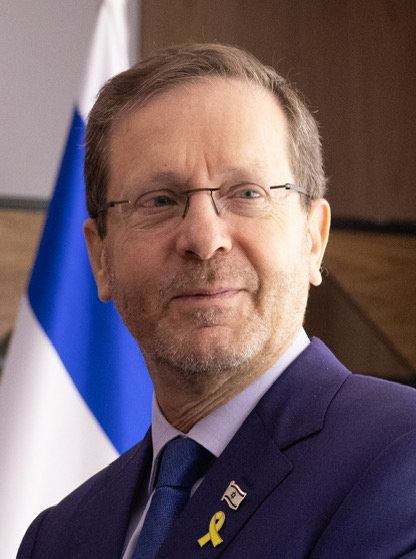
Isaac Herzog is Israel’s 11th president, a former lawyer, cabinet minister and parliamentary opposition leader. He entered the presidency in July 2021 after a career in Labor Party politics and a three-year period leading the Jewish Agency. His family has a long history in Israeli public life: his father, Chaim Herzog, was the country’s sixth president.
The presidency places Herzog in a different position from the prime minister. He is the head of state, with constitutional and representative duties, rather than the head of the government. That distinction is especially important when following elections, coalition negotiations and diplomatic appearances.
Isaac Herzog at a glance
| Detail | Information |
|---|---|
| Born | September 22, 1960, Tel Aviv |
| Age | 66 as of November 24, 2026 |
| Nickname | Bougie |
| Legal education | Law degree from Tel Aviv University |
| Earlier profession | Lawyer |
| Knesset service | 2003–2018 |
| Labor Party leadership | Elected leader in 2013 |
| Jewish Agency | Executive chairman, 2018–2021 |
| Presidential election | June 2, 2021 |
| Current office | President of Israel; entered office July 2021 |
Early life and a family in public service
Herzog was born in Tel Aviv to Aura and Chaim Herzog. His childhood included schooling in New York while his father served as Israel’s ambassador to the United Nations. The family connection to diplomacy therefore preceded his own public career.
His father later held the presidency from 1983 to 1993. Isaac Herzog’s grandfather, Rabbi Yitzhak Isaac Herzog, was a chief rabbi, while other family members worked in public and charitable life. This background provided familiarity with institutions, but Isaac’s route to the presidency still involved his own legal career, party contests and parliamentary service.
The President’s Office biography describes his upbringing and professional background. It is useful for family relationships and dates, while its favorable descriptions of leadership should be understood as the institution’s own account.
Military service, law and early public work
Herzog served as an officer in the Israeli intelligence corps and subsequently qualified as a lawyer. He worked in communications law and became a senior partner at Herzog Fox & Neeman. His early professional identity was therefore legal rather than solely political.
Communications law sits where business, regulation and public policy meet. It provided a professional foundation before his move into government. Legal practice and ministerial leadership involve different duties, but both require working through complex rules and competing institutional interests.
His career also included service as government secretary before he entered the Knesset. That position brought experience within executive government before he became an elected parliamentary representative. It forms an important bridge between his legal practice and the ministerial offices he later held.
Knesset service and cabinet portfolios
Herzog served in the 16th through 20th Knessets, covering 2003–2018. His ministerial responsibilities included housing and construction, tourism, welfare and social services, and diaspora affairs. A Knesset life-story document prepared in 2021 records these stages.
The portfolios involved very different constituencies. Housing concerns families, development and affordability; welfare involves public services and vulnerable residents; diaspora affairs concerns relationships extending beyond Israel’s borders. That range helps explain why his later presidential biography emphasizes both domestic society and international connections.
He also published books addressing socioeconomic questions. The 2021 document lists a 2004 work on solutions for an economy in crisis and a 2010 book on economic well-being. These publications belong to his earlier policy career and should not be mistaken for presidential directives.
Labor leadership and the Zionist Union
In 2013, Herzog won the Labor Party leadership. Ahead of the 2015 election, Labor joined Tzipi Livni’s Hatnuah in the Zionist Union. He also served as leader of the parliamentary opposition.
This was the openly competitive phase of his political career: building alliances, contesting elections and presenting an alternative to the government. The presidency would later ask him to operate in a different institutional setting, representing the state rather than leading a party’s parliamentary challenge.
That change does not erase a president’s political history. It does change the responsibilities attached to the office. Keeping those stages separate helps readers understand why a former opposition leader may later consult with parties across the political spectrum.
Leading the Jewish Agency
Between his parliamentary career and the presidency, Herzog chaired the Executive of the Jewish Agency from 2018 to 2021. The agency’s biographical record confirms that period.
The appointment placed him in an organization with close connections to Jewish communities internationally. It extended the diaspora dimension of his earlier public work and provided a setting outside the day-to-day parliamentary contest.
His move from the agency to the presidency in 2021 therefore followed experience in law, ministries, opposition leadership and an international Jewish institution. Those roles differed in authority, but each contributed to the public network and institutional experience he brought to the head-of-state office.
Election as president in 2021
The Knesset elected Herzog on June 2, 2021, in a secret ballot. He received 87 votes, according to the Knesset’s election announcement. He entered office in July.
The distinction between election and taking office corrects a potential source of confusion in brief biographies. June was the parliamentary vote; July marked the beginning of his presidential service. Both events belong in a precise timeline.
The president is chosen by the Knesset rather than through a nationwide direct presidential election. Herzog’s support in that ballot was support for a head of state, not a public vote choosing him as prime minister or endorsing a governing coalition.
What Israel’s president does
The Basic Law on the presidency provides for a single seven-year term. It also sets out duties involving laws, diplomatic credentials, treaties approved by the Knesset and powers concerning pardons and sentence reductions.
These are significant constitutional functions, even though the president does not lead the cabinet. The office can also provide a platform for dialogue, representation and public appeals. Its formal authority and its ability to influence discussion are related but not identical.
Understanding those limits is useful when reading presidential statements. A speech can communicate a position or encourage compromise without becoming a new government policy. Similarly, receiving a foreign leader is part of state representation and does not mean the president controls every decision in foreign affairs.
Dialogue over judicial changes
In 2023, Herzog tried to promote compromise during Israel’s dispute over proposed judicial changes. He appealed for a pause and presented a framework intended to bring opposing sides into discussion.
Reporting on his March 15 proposal describes the effort and the government’s rejection of the framework. The episode illustrates both the visibility and the limits of presidential mediation: Herzog could convene and propose, but he could not make competing political groups accept an agreement.
The mediation belongs to the record of his presidency even though it did not produce the consensus he sought. It shows the office acting through persuasion in a dispute involving institutions whose powers were themselves being debated.
International representation
On July 19, 2023, Herzog addressed a joint meeting of the U.S. Congress during Israel’s 75th anniversary year. The official speech text records his presentation of the U.S.–Israel relationship and his discussion of divisions within Israeli society.
The visit demonstrates the representative side of the presidency. International audiences may hear a head of state articulate national identity and long-term relationships, while the government remains responsible for executive policy. The distinction is particularly important in a politically contested period.
Government formation in November 2026
On November 8, 2026, Herzog assigned Gadi Eisenkot, leader of Yashar, the task of forming a government. The President’s Office announcement records the ceremony after consultations with parliamentary factions.
The mandate begins a coalition-building process; it does not itself install a new cabinet. A November 24 report on the negotiations still described formation plans. This profile therefore records the assignment without declaring that a new government had already taken office.
Career timeline
| Period | Role or milestone | Setting |
|---|---|---|
| Before parliament | Legal practice and government secretary | Professional and executive government experience |
| 2003–2018 | Knesset member and cabinet service | Legislative and ministerial work |
| 2013 | Elected Labor leader | Party leadership |
| 2015 | Zionist Union election alliance | Labor and Hatnuah cooperation |
| 2018–2021 | Jewish Agency executive chairman | International Jewish institutional leadership |
| June–July 2021 | Elected and entered presidency | Head-of-state role |
| 2023 | Judicial dialogue and Congress address | Domestic mediation and international representation |
| November 2026 | Assigned government formation mandate | Post-election constitutional process |
Frequently asked questions
Who is Isaac Herzog?
He is Israel’s 11th president and a former lawyer, cabinet minister, Labor leader and Jewish Agency chairman.
How old is Isaac Herzog?
He is 66 as of November 24, 2026. He was born on September 22, 1960.
Is Isaac Herzog related to Chaim Herzog?
Yes. Chaim Herzog, Israel’s sixth president, was his father. His mother was Aura Herzog.
When did he become president?
The Knesset elected him on June 2, 2021, and he entered office in July 2021.
Is Herzog Israel’s prime minister?
No. He is the president and head of state. The prime minister leads the government.
How long is the presidential term?
The Basic Law provides for one seven-year term, with the president elected by the Knesset.
What did Herzog do after the 2026 election?
He consulted parliamentary factions and, on November 8, assigned Gadi Eisenkot the task of forming a government.

Thomas Andrew is the founder of Odubio.com, a digital platform sharing inspiring biographies, news, and stories about global icons and achievers.