
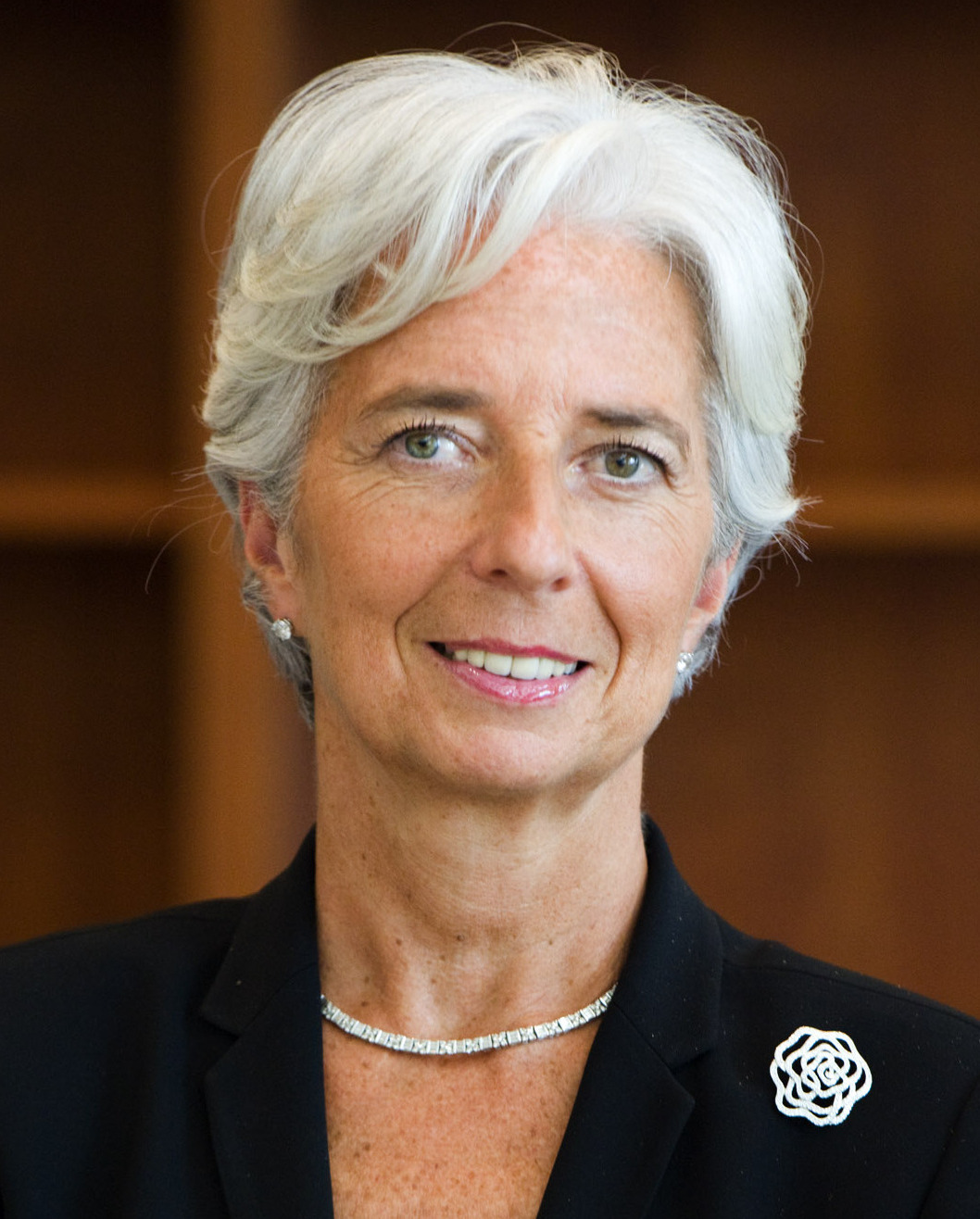
Christine Lagarde is a French lawyer and international public official whose career has taken her from a global law firm to the French finance ministry, the International Monetary Fund and the European Central Bank. She became ECB president in November 2019, bringing experience in negotiation, government and international economic institutions to the bank responsible for the euro area’s monetary policy.
Born in Paris on January 1, 1956, Lagarde is 70 as of November 24, 2026. She remains ECB president at this update, although the bank has announced that she will step down on February 7, 2027. Understanding that distinction is important: an announced future departure is different from an officeholder having already left.
Christine Lagarde biography at a glance
| Detail | Information |
|---|---|
| Date of birth | January 1, 1956 |
| Birthplace | Paris, France |
| Age | 70 as of November 24, 2026 |
| Professional foundation | Law, followed by government and international economic leadership |
| French economy and finance minister | 2007–2011 |
| IMF managing director | 2011–2019 |
| ECB presidency | Since November 2019 |
| Announced departure | February 7, 2027 |
Education and an international outlook
Lagarde’s early education included high school in Le Havre and a period at Holton-Arms School in Bethesda, Maryland. The IMF’s archived biography also records that she belonged to the French national synchronized swimming team. These experiences preceded her professional identity as a lawyer and later her much more visible public appointments.
Her ECB curriculum vitae lists studies in American literature, economics and finance, and commercial and labour law. Her legal qualifications at University Paris X and studies at Sciences Po Aix-en-Provence are particularly relevant to the work that followed. She entered public economic leadership through legal practice and institutional management rather than a conventional academic economics career.
That background offers a useful way to follow her biography. In each successive role, she worked within institutions where technical expertise, legal authority and negotiation intersect. The tasks changed substantially, however: representing clients, serving a national government and presiding over a central bank involve different responsibilities and different forms of accountability.
The Baker McKenzie years
After admission to the Paris Bar, Lagarde joined Baker McKenzie. Her practice included labour law, antitrust and mergers and acquisitions for international corporate clients. She later moved into management, joining the firm’s executive committee in 1995 and becoming chair of its global executive committee in 1999. The IMF records her chairmanship of the global strategic committee in 2004.
The legal years are more than a preliminary chapter before the famous appointments. Running an international firm requires coordination across offices and legal systems, while corporate practice involves translating complex rules into decisions. Those are recognizable elements of her later public work, even though a government or central bank has a public mandate that a private law firm does not.
Her progression also helps explain why short descriptions of Lagarde as simply a banker are incomplete. Her documented professional roots lie in law, and her later career involved directing economic institutions rather than commercial banking.
From French trade minister to finance minister
Lagarde joined the French government as minister for foreign trade in June 2005. After a brief appointment covering agriculture and fisheries, she became economy and finance minister in June 2007. She was the first woman to hold that finance and economy portfolio in a G7 country, according to the IMF’s institutional account.
Her ministerial period coincided with international coordination through the European Union and G20. France held the EU presidency during the second half of 2008 and the G20 presidency in 2011. The offices she held placed her within discussions about financial supervision and international economic governance during a difficult period for the global financial system.
A finance minister’s responsibilities differ from those of a central bank president. National fiscal choices concern government revenues, expenditure and financing; monetary policy concerns the conditions under which money and credit circulate. Lagarde’s move between these areas is a defining feature of her public career, but the distinction prevents the powers of one office from being mistakenly attributed to another.
Leading the International Monetary Fund
Lagarde became the IMF’s eleventh managing director on July 5, 2011, and the first woman to hold that position. Her second term began on July 5, 2016. She resigned with effect from September 12, 2019, following her nomination for the ECB presidency.
At the IMF, her constituency extended beyond one country or currency union. The institution’s work involves the international monetary system and member economies. Its managing director therefore operates in a setting shaped by different national circumstances and by the organization’s governance, rather than exercising the powers of a national elected leader.
Gender and economic participation were among her public themes. In a March 2019 Finance & Development article, she argued that women’s empowerment mattered for both fairness and economic performance. She discussed education, access to finance, legal protection, transport and flexible employment arrangements as areas where policy could affect opportunity.
The article is useful evidence of her policy perspective. It connects social inclusion with productivity and macroeconomic outcomes, showing how she framed a wider economic case for participation. It should be read as an argument she advanced, rather than a claim that every suggested measure produced a particular result during her tenure.
Career timeline
| Period | Position or milestone | Institutional setting |
|---|---|---|
| 1995 | Executive committee membership | Baker McKenzie |
| 1999 | Global executive committee chair | International legal practice |
| 2005 | Foreign trade minister | French government |
| 2007–2011 | Economy and finance minister | French government |
| 2011–2019 | Managing director | International Monetary Fund |
| November 2019 | ECB presidency began | Euro area monetary policy |
| October 2026 | Future departure announced | Departure scheduled for February 7, 2027 |
ECB presidency and the pandemic response
Lagarde began at the ECB shortly before the coronavirus pandemic disrupted European economies. The bank’s 2020 annual report documents the Governing Council’s decision on March 18 to establish the pandemic emergency purchase programme, initially with a €750 billion envelope.
The programme was intended to address severe pressure on financing conditions and risks to the transmission of monetary policy. In practical terms, the concern was not only the headline level of interest rates but also whether monetary policy could reach households and businesses across the currency area during an exceptional shock.
These were Governing Council decisions. Although the president communicates policy and chairs the institution, attributing every measure to Lagarde alone would misrepresent how the ECB works. Her presidency is best understood through both her leadership and the collective decision-making arrangements surrounding it.
The 2021 strategy review
Another significant development was the conclusion of the ECB’s monetary policy strategy review in July 2021. The bank’s annual report describes the adoption of a symmetric 2% inflation target over the medium term. Symmetry means deviations above and below the target are both considered undesirable.
The review also addressed communication and the challenge of operating when interest rates are close to their effective lower bound. For visitors following Lagarde’s biography, its significance is that her presidency included a reconsideration of the framework used to explain and conduct policy, alongside the immediate response to the pandemic.
A target is an institutional objective, not a promise that prices will increase at exactly that rate every month. Economic shocks and the time required for policy to affect activity make that distinction essential when interpreting public discussion of the ECB.
What the announced 2027 departure means
On October 29, 2026, the ECB announced that Lagarde had informed its Governing Council and European Council President António Costa that she would step down on February 7, 2027. As of this article’s November 24 review, that date remains in the future.
The European Council’s appointment guide explains that an ECB president is appointed through a process involving a Council recommendation and consultation with the European Parliament and ECB Governing Council. Executive Board terms are normally eight years and non-renewable. A potential candidate discussed in reporting should not be presented as an appointed successor before the formal decision.
Her chronology illustrates an unusually broad public career: the same biography contains private legal management, national cabinet responsibility and leadership of two major international economic institutions, each operating under a distinct mandate.
Frequently asked questions
How old is Christine Lagarde?
She is 70 as of November 24, 2026. She was born on January 1, 1956, in Paris.
Was Christine Lagarde a lawyer?
Yes. She practised at Baker McKenzie and held global leadership positions before joining the French government.
When did she lead the IMF?
Her tenure began July 5, 2011, and her resignation became effective September 12, 2019. She was the institution’s first female managing director.
When did she become ECB president?
She began the presidency in November 2019, after her French ministerial career and IMF leadership.
Has Christine Lagarde already left the ECB?
No, as of November 24, 2026. The announced departure date is February 7, 2027.
Does she decide euro area interest rates alone?
No. Monetary policy decisions are made through the ECB’s Governing Council. The presidency is a leadership role within that collective structure.
What is her professional legacy associated with?
Her career is associated with international law, French finance policy, IMF leadership and euro area monetary policy, including the pandemic response and 2021 strategy review.

Thomas Andrew is the founder of Odubio.com, a digital platform sharing inspiring biographies, news, and stories about global icons and achievers.