
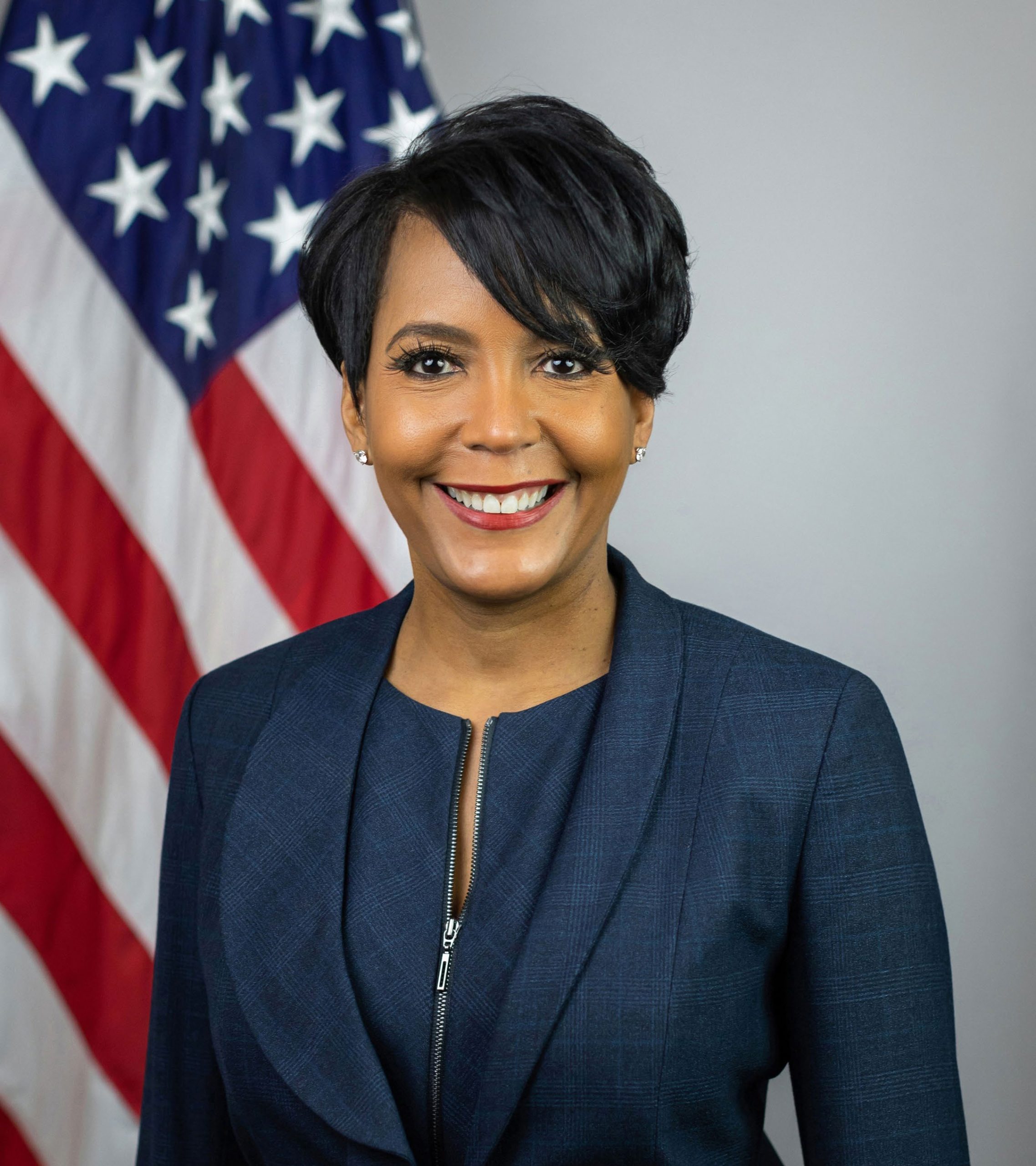
Keisha Lance Bottoms built her public career in Atlanta before moving into national politics and, in November 2026, winning Georgia’s governor’s election. She has been a lawyer, judge, City Council member, mayor and White House adviser. The common thread is a focus on how government decisions reach families, from municipal services and housing to engagement with the federal administration.
Her election made her the first Black woman elected governor of a U.S. state. As of November 24, 2026, she is governor-elect, preparing for a new administration. Her future governorship should be distinguished from the mayoral and White House work she has already completed.
Keisha Lance Bottoms at a glance
| Detail | Information |
|---|---|
| Home city | Atlanta, Georgia |
| Political party | Democratic Party |
| Undergraduate education | Florida A&M University, broadcast journalism, 1991 |
| Legal education | Georgia State University College of Law, JD, 1994 |
| Atlanta City Council | District 11 representative, 2010–2017 |
| Mayor of Atlanta | 60th mayor, 2018–2022 |
| White House service | Senior adviser for public engagement in the Biden administration |
| Family | Married to Derek Bottoms; four children |
| Current status | Georgia governor-elect as of November 24, 2026 |
Atlanta roots and family background
Bottoms grew up in Atlanta and attended Frederick Douglass High School. Her parents are singer Major Lance and Sylvia Robinson. Her family history reaches back generations in Georgia, a connection she has discussed when describing why she entered public service. Atlanta is therefore both her hometown and the place where she developed her political identity.
Her upbringing placed her within a city known for civil rights history, universities, business and rapidly changing neighborhoods. Those features later became central to her mayoral agenda. The challenge of growth was particularly important: a successful city can attract investment while leaving longtime residents struggling with higher housing costs.
Her campaign biography describes that background and her commitment to working families. As a campaign document, it presents her own case for office. Its accounts of priorities are useful alongside government records and reporting on what her administration actually did.
From journalism studies to law
Bottoms earned a bachelor’s degree in broadcast journalism from Florida A&M University in 1991. She then studied at Georgia State University College of Law, completing her JD in 1994. The universities document those qualifications in their own alumni accounts.
FAMU’s announcement following the 2026 election identifies her as a 1991 graduate and connects her career to the university’s public service tradition. Her route was unusual in combining journalism training with legal practice. One field emphasizes explaining information to an audience; the other requires interpreting rules and representing clients.
Neither degree automatically prepared her for every difficulty of elected leadership. Together, however, they help explain the communication and legal experience she brought into public life. Her career subsequently involved courtrooms, neighborhood campaigns, city administration and national public engagement.
Legal work and the City Council
Before becoming mayor, Bottoms practiced law and served as a magistrate judge. She also represented District 11 on the Atlanta City Council from 2010 through 2017. That experience placed her close to the practical concerns residents bring to local government: services, neighborhood development and decisions about public money.
A council member participates in legislation and oversight, while a mayor is responsible for leading the executive administration. Bottoms’ move between those roles expanded her responsibilities substantially. Earlier judicial experience added another perspective on how local institutions operate.
The city’s official mayoral biography records her progression through Atlanta government. Its description of her mayoral initiatives is a historical account from that administration, rather than an independent assessment of every policy outcome.
Becoming Atlanta’s 60th mayor
Bottoms took office on January 2, 2018, following a close election against Mary Norwood. Her administration used the theme One Atlanta to describe an agenda centered on affordability, inclusion and opportunity. The goal was to connect the benefits of economic growth with residents who could otherwise be left behind.
The opening year brought an immediate test when a ransomware attack disrupted city systems. Georgia Trend’s profile naming her its 2020 Georgian of the Year describes the difficult beginning and her administration’s subsequent work. It is particularly useful for understanding the difference between campaigning for an office and managing an organization during an unexpected crisis.
Atlanta also hosted Super Bowl LIII during her term. Major events require coordination across public safety, transport, hospitality and city operations. They are highly visible occasions, but the everyday work of municipal government continues before and after the visitors leave.
Housing, transparency and criminal justice policy
Affordable housing was one of Bottoms’ major policy priorities. Georgia Trend reported that the Gulch redevelopment agreement included a $28 million affordable housing trust fund. Her wider housing plans addressed both creating units and helping residents remain in neighborhoods experiencing rising costs.
Housing announcements can involve several different stages: approving funding, committing investment, starting construction and completing homes. A historical target should therefore remain a target unless a later record establishes that it was reached. Her mayoral agenda is significant without turning every announced ambition into a completed result.
The city’s biography also identifies the establishment of an Office of Equity, Diversity and Inclusion and the launch of Atlanta’s Open Checkbook. Publishing financial information can make government spending easier for residents to examine. Its value depends on people being able to understand and use that information, as well as on the availability of the records themselves.
Criminal justice changes included ending cash bail requirements for low-level, nonviolent offenses and ending the city detention center’s use for federal immigration detainees. These were specific municipal decisions. They should not be described as abolishing every form of bail across Georgia or closing the state’s wider detention system.
Leading during the pandemic and protests
The latter part of Bottoms’ mayoral term coincided with COVID-19 and nationwide protests over racial justice. These events created overlapping pressures on city services, public communication and public safety. They also brought her work to a wider national audience.
President Joe Biden’s June 15, 2022 appointment statement cited her leadership during the pandemic, protests and the mass shooting that affected Atlanta’s Asian American community. That statement explains the president’s reasons for selecting her for his staff; it is also a record of the transition from municipal leadership to a White House role.
White House public engagement role
After leaving the mayor’s office in 2022, Bottoms became senior adviser for public engagement in the Biden administration. Public engagement connects the administration with organizations, communities and stakeholders whose concerns may inform its work.
FAMU’s journalism school announcement described the role as involving community leaders and diverse perspectives at local, state and national levels. The work differed from being mayor: she was serving within a presidential administration rather than leading a city with her own electoral mandate.
The appointment nevertheless drew on her experience communicating with residents and navigating competing interests. Moving from Atlanta to national engagement also widened the range of organizations and policy concerns with which she worked.
Career timeline
| Year or period | Milestone | Context |
|---|---|---|
| 1991 | Graduated from Florida A&M | Studied broadcast journalism |
| 1994 | Completed Georgia State law degree | Foundation for legal practice and judicial service |
| 2010–2017 | Atlanta City Council | Represented District 11 |
| 2018–2022 | Mayor of Atlanta | City executive leadership through major events and crises |
| 2022 | White House appointment announced | Senior adviser for public engagement |
| 2026 | Won Georgia governor’s election | First Black woman elected governor of a U.S. state |
Georgia’s 2026 governor’s election
Bottoms defeated Republican Rick Jackson in the November 3, 2026 election. Associated Press reporting identified the result and its historic significance. The victory moved her career from Atlanta and presidential staff work toward statewide executive leadership.
Georgia State’s president recognized her election on November 11, noting her 1994 law degree. The distinction was national as well as local: no Black woman had previously been elected governor of a U.S. state.
Her new role brings a broader constituency and a different set of institutional relationships. Municipal experience informs a governor’s preparation, but statewide governing requires working with the legislature and serving communities far beyond the former mayor’s city. As of this update, that administration’s record is still ahead of her.
Family life
Bottoms is married to Derek Bottoms, and they have four children. Her family appears in her public accounts of leadership and community, but her professional record stands on its own: legal practice, local government, national engagement and a successful statewide election.
Frequently asked questions
Who is Keisha Lance Bottoms?
She is Georgia’s governor-elect, a former Atlanta mayor and a former White House senior adviser for public engagement.
What did she study at FAMU?
She studied broadcast journalism and graduated in 1991, according to Florida A&M University’s alumni announcement.
Where did she earn her law degree?
She earned her JD at Georgia State University College of Law in 1994.
When was she mayor of Atlanta?
She served as the city’s 60th mayor from 2018 to 2022, taking office on January 2, 2018.
What did she do in the White House?
She served as senior adviser for public engagement, helping connect the Biden administration with communities and organizations.
Who is her husband?
She is married to Derek Bottoms. The couple has four children and longstanding ties to Atlanta.
Why was her 2026 election historic?
Her Georgia victory made her the first Black woman elected governor of a U.S. state. She remains governor-elect as of November 24, 2026.

Thomas Andrew is the founder of Odubio.com, a digital platform sharing inspiring biographies, news, and stories about global icons and achievers.