
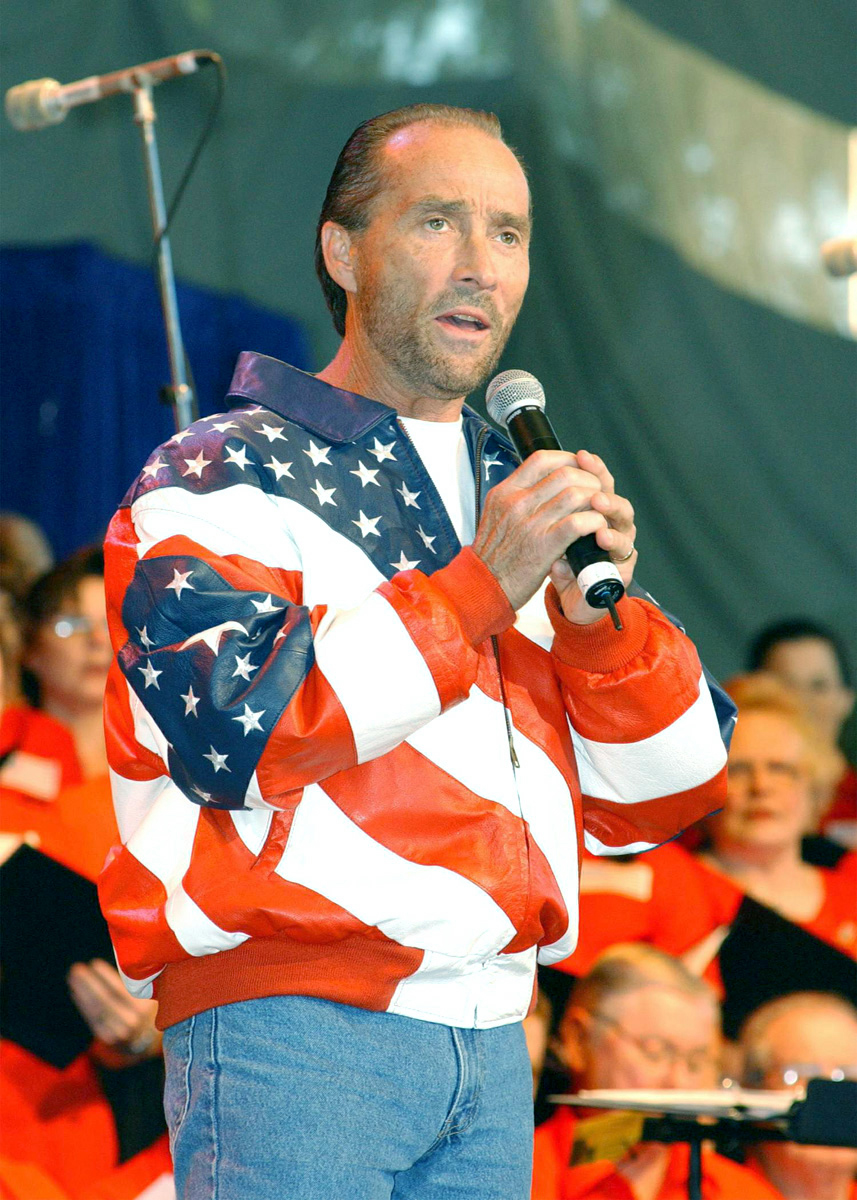
Lee Greenwood’s net worth is estimated at $5 million by Celebrity Net Worth. The figure is a publisher’s estimate, not an audited disclosure from the singer. His documented career stretches from California and Nevada entertainment work to country hits, a Grammy win and the unusually enduring public life of “God Bless the U.S.A.”
That patriotic song is central to his reputation, but it is only one part of the story. Greenwood also built a successful country-pop catalogue, recorded duets, worked with veterans’ organizations and accepted a university artist-in-residence appointment. Understanding those separate activities gives a clearer picture of his career than treating one famous chorus as his entire professional history.
Lee Greenwood at a glance
| Detail | Information |
|---|---|
| Born | October 27, 1942, in the Los Angeles area of California |
| Age | 84 on November 24, 2026 |
| Profession | Country singer, songwriter and live entertainer |
| Signature song | God Bless the U.S.A., released in 1984 |
| Grammy-winning recording | I.O.U.; Best Country Vocal Performance, Male, in 1984 |
| Published net-worth estimate | $5 million, attributed to Celebrity Net Worth |
| University role | Named High Point University Artist in Residence in October 2024 |
What is Lee Greenwood’s net worth?
Celebrity Net Worth’s profile gives Greenwood an estimated $5 million fortune. The source establishes where that widely repeated number comes from; it does not establish his exact bank balance or a salary for the current year. His recording and performing career offers context for the estimate without proving its precision.
A singer’s catalogue can continue earning after the original recording becomes famous. Performances, songwriting rights and commercial agreements can also generate income. However, fees, expenses, taxes and contractual shares affect what the individual retains. A concert’s ticket sales are therefore a different measure from a performer’s wealth.
Greenwood has not provided a complete public balance sheet in the sources reviewed here. For that reason, a specific value is not assigned to his song catalogue, investments or commercial licensing arrangements. The defensible answer is the attributed estimate, followed by the professional history that can actually be checked.
Early life in California
Greenwood was born in 1942 and spent part of his childhood on his grandparents’ farm. His official biography describes parents separated during the Second World War and a childhood in which his grandparents helped raise him and his sister. Music eventually became his route into professional entertainment.
AllMusic’s biography places those early years near Sacramento and describes him teaching himself saxophone as a child. It traces his work through a pop band, Apollo, and the Nevada entertainment circuit. These beginnings explain why his later singing was comfortable with smooth, crossover arrangements as well as country material.
He was not an overnight newcomer when country audiences began hearing his records nationally. Years of performing preceded the hits. That background involved learning to hold a room’s attention, deliver familiar material and work regularly in settings where entertainment was a nightly job rather than an occasional showcase.
Las Vegas, Reno and the road to Nashville
Greenwood’s early professional life included Las Vegas lounges and casino work. AllMusic describes a period when he performed in a revue while also dealing blackjack. By the end of the 1970s, his Reno appearances brought him into contact with Larry McFaden, associated with Mel Tillis’s touring band.
A contemporary Nevada magazine profile from December 1987 also recounts McFaden recognizing Greenwood’s potential. It describes an earlier recording opportunity that fell apart after a change in corporate ownership. The episode is a useful reminder that his path to success included reversals, rather than a simple progression from first performance to hit record.
By the early 1980s, the work was reaching a national country audience. Songs such as “It Turns Me Inside Out” and “Ring on Her Finger, Time on Her Hands” helped establish the recording career. The distinction between his long apprenticeship and his later chart breakthrough is essential to understanding the persistence behind his success.
The country hits beyond God Bless the U.S.A.
Greenwood’s Opry artist profile lists a broad repertoire, including “Dixie Road,” “Somebody’s Gonna Love You,” “Going, Going, Gone” and “Mornin’ Ride.” It also identifies crossover recordings such as “Touch & Go Crazy” and “To Me,” his duet with Barbara Mandrell.
These songs place him within the romantic ballad and polished country-pop traditions of his era. A listener who knows only his patriotic recording may be surprised by how much of his catalogue concerns relationships. His distinctive delivery, rather than a single subject, connects that work.
High Point University’s career summary credits him with seven number-one country songs. That is more specific than broad promotional totals combining different platforms and charts. His successes also brought major vocalist recognition: the Academy of Country Music honored him in 1983, and the Country Music Association named him Male Vocalist of the Year in 1983 and 1984.
Which song won Lee Greenwood his Grammy?
The Recording Academy’s awards database records his 1984 Grammy win for “I.O.U.” in Best Country Vocal Performance, Male. Some promotional biographies give a different year, but the Academy’s own award record provides the precise result used here.
“God Bless the U.S.A.” received Grammy nominations in 1985 for male country vocal performance and country song. Those nominations were not wins. Separately, the song earned the Country Music Association’s Song of the Year honor in 1985. Keeping the organizations and results separate avoids turning several distinct honors into an inaccurate claim.
Why God Bless the U.S.A. lasted
Greenwood’s official account says he wrote the song on his tour bus in 1983; it was released in 1984. Its emphasis on national belonging gave it a life beyond the normal promotional cycle of a country single. Over time it became associated with military occasions, public ceremonies and political gatherings.
The song’s history is also visible in official records. A 1990 Congressional Record passage identifies it as the CMA’s 1985 Song of the Year and dedicates its sentiments to American troops in the Middle East. That is evidence of its public use well before later presidential campaigns renewed its exposure.
The same recording can mean different things in different settings: a personal expression of attachment for one listener, a ceremonial standard for another, or campaign music for someone else. Its continued recognition helps explain Greenwood’s public visibility decades after its release without requiring a claim that every audience interprets it identically.
Veterans’ work and an educational appointment
Greenwood’s public work includes support for military personnel and veterans. An archived National Guard publication describes his Tennessee theater production and an offer reducing admission for Guard and Reserve members. Its account shows the connection in a concrete performance setting, rather than simply applying a general charitable label.
Helping a Hero also features the Lee Greenwood Patriot Awards in its work supporting severely wounded veterans. Charitable events and adaptive-housing campaigns should be understood as organizational efforts involving donors and partners; their total fundraising is not Greenwood’s personal income.
On October 15, 2024, High Point University announced him as Artist in Residence through its Access to Innovators program. The university describes that program as a way for students to engage with experienced industry figures. Its November 2025 report documents his performance at the institution’s Veterans Day celebration. The appointment is not presented here as a conventional full-time professorship.
Career milestones and award distinctions
| Period | Milestone | Why it matters |
|---|---|---|
| Before the country hits | California and Nevada entertainment work | A long professional apprenticeship preceded national recognition |
| Early 1980s | Country recordings gained a national audience | Established a catalogue beyond the patriotic song |
| 1984 | Grammy win for I.O.U. | His winning recording was a romantic ballad |
| 1985 | CMA Song of the Year for God Bless the U.S.A. | A separate honor from its Grammy nominations |
| 2024 | High Point artist-in-residence appointment | Connected professional experience with university engagement |
| 2025 | Named in the Horatio Alger member class | Recognition emphasizing perseverance and educational opportunity |
Licensing, politics and later recognition
In a January 2025 Associated Press interview, Greenwood discussed performing for Donald Trump and the “God Bless the USA Bible.” He said his licensing agreement was with the manufacturer, while Trump had a separate arrangement. The interview does not disclose Greenwood’s payment or establish that he and Trump share one financial contract.
The Horatio Alger Association selected Greenwood for its 2025 member class, highlighting an early life involving adversity and the value of persistence. Alongside the music awards, this recognition reflects a public career that extends into education, charitable events and civic performance. It should not be confused with a new music-chart achievement.
Frequently asked questions
How much is Lee Greenwood worth?
Celebrity Net Worth estimates $5 million. The number should retain that attribution because it is not a verified personal financial disclosure.
How old is Lee Greenwood?
Born on October 27, 1942, he was 84 on November 24, 2026.
Did God Bless the U.S.A. win a Grammy?
No. It received Grammy nominations in 1985. His Grammy win was for “I.O.U.” in 1984.
Did he write God Bless the U.S.A.?
Yes. His official biography dates its writing to 1983, before its 1984 release. It later won the CMA’s 1985 Song of the Year award.
What other Lee Greenwood songs are well known?
His catalogue includes “Dixie Road,” “Somebody’s Gonna Love You,” “Mornin’ Ride” and the Barbara Mandrell duet “To Me.”
What is his connection to High Point University?
The university named him Artist in Residence in October 2024 as part of its Access to Innovators program.
Does the Bible licensing deal reveal his earnings?
No. Greenwood described a manufacturer licensing agreement in the AP interview, but the cited account does not establish his fee, profit or total wealth.

Thomas Andrew is the founder of Odubio.com, a digital platform sharing inspiring biographies, news, and stories about global icons and achievers.