
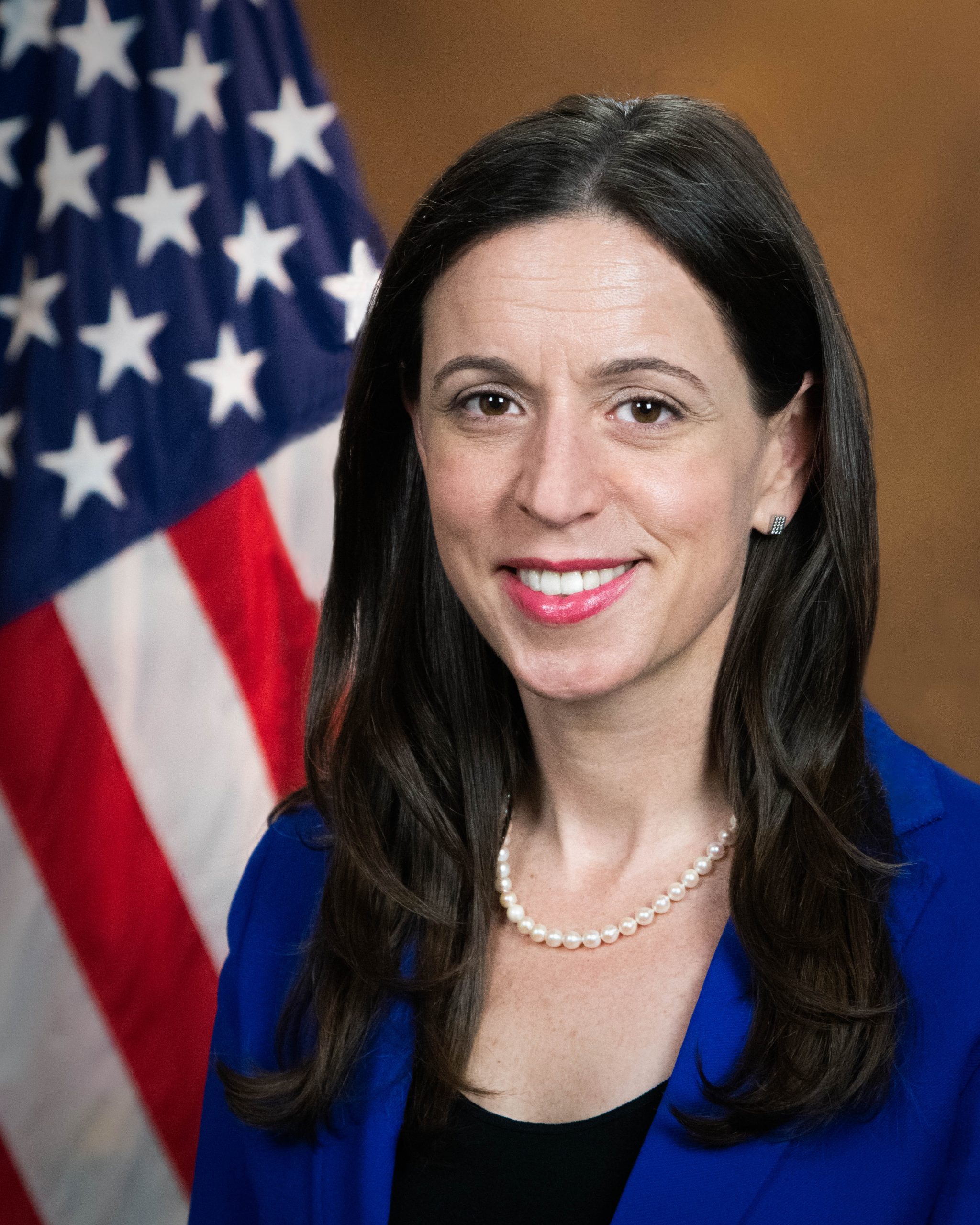
Elizabeth “Liz” Oyer is an American attorney and legal commentator who served as U.S. pardon attorney from April 2022 to March 2025. Her earlier career included a federal appellate clerkship, partnership at Mayer Brown and a decade in federal public defense. Those roles brought together trial work, appellate advocacy and questions about how the criminal justice system affects individual lives.
After leaving the Justice Department, she developed Lawyer Oyer, a platform discussing courts, criminal justice and presidential power. She has also challenged her removal through legal proceedings. This biography, reviewed November 24, 2026, separates her documented career from claims in litigation that have not been established by a final merits judgment in the sources reviewed.
Liz Oyer biography at a glance
| Detail | Information |
|---|---|
| Full professional name | Elizabeth G. Oyer |
| Undergraduate institution | Georgetown University, School of Foreign Service |
| Law school | Harvard Law School |
| Clerkship | Judge Stanley Marcus, Eleventh Circuit |
| Private practice | Partner at Mayer Brown, Washington, D.C. |
| Public defense | Federal Public Defender for the District of Maryland |
| Pardon attorney tenure | April 2022–March 2025 |
| Later public work | Lawyer Oyer legal commentary and public education |
Georgetown, Harvard and early legal training
The Justice Department’s archived biography records Oyer’s undergraduate degree from Georgetown’s School of Foreign Service and law degree from Harvard. She graduated with academic honours from both institutions.
At Harvard, she was an executive editor of the Harvard Law Review and participated on the winning team in the Ames Moot Court Competition, receiving its Best Oralist recognition. Those activities involved different forms of legal work: close engagement with written analysis and the presentation of an argument before a simulated appellate court.
Following law school, she clerked for Judge Stanley Marcus on the U.S. Court of Appeals for the Eleventh Circuit. An appellate clerkship places a young lawyer close to the process of reviewing legal arguments and the record from earlier proceedings. That setting preceded her later experience representing clients at both trial and appellate levels.
Private practice at Mayer Brown
Oyer was a partner in Mayer Brown’s Washington office before moving into federal public defense in 2012. A District of Columbia Judicial Nomination Commission biography describes civil and criminal litigation, including class actions and multidistrict matters.
The same profile records an active pro bono practice. That part of the record is relevant because it shows public-service legal work alongside commercial practice. Her later career did not emerge from a single type of law office or a single kind of case.
Trial and appellate litigation require related but distinct approaches. At trial, lawyers develop evidence and address the immediate dispute. An appeal usually focuses on whether legal error occurred within a record already created. Experience in both settings can shape how an attorney evaluates a case long after the initial conviction or judgment.
Her private-practice years therefore form a substantive part of the biography, rather than merely a prestigious firm name preceding government service.
A decade as a federal public defender
Oyer joined the federal defender’s office in Maryland in 2012. The official career records describe her as senior litigation counsel representing defendants at different stages of federal criminal proceedings. The cases spanned a range of alleged offenses rather than one narrow category.
Her responsibilities also included ethics and conflicts advice, discovery policy coordination and mentoring junior lawyers. These functions concern how an office handles its work as well as how an individual attorney presents a case in court.
Discovery involves access to information relevant to litigation. Ethics and conflicts questions concern professional obligations and whether a lawyer can properly undertake a representation. Mentoring helps translate those requirements into consistent day-to-day practice. Together, the responsibilities indicate experience with both individual cases and the quality of an office’s legal work.
The defender background is especially relevant to her later clemency appointment. It involved representing people within the federal criminal system, including understanding a case beyond its public headline. The Justice Department explicitly linked that experience with her understanding of second chances when announcing her pardon-attorney role.
What the U.S. pardon attorney does
Oyer became pardon attorney in April 2022. The office assists the president in considering executive clemency. Its work includes examining applications, gathering information and preparing recommendations through the Justice Department.
The Justice Manual describes investigation and consultation as parts of that review. The office may need information from prosecutors or other relevant components to understand the offense, its circumstances and the applicant’s background. It is not simply a system for forwarding a request without examination.
The department’s explanation of the process makes the division of responsibility clear: DOJ investigates and recommends, while the president decides. Oyer’s title did not give her the personal power to issue presidential pardons.
That distinction is essential to understanding her tenure. A recommendation is professional advice within a process. The final exercise of clemency belongs to the president, who holds the constitutional authority. Attributing every presidential decision to the pardon attorney would misstate the office’s role.
Pardons, commutations and the scope of the work
The Office of the Pardon Attorney’s public description distinguishes a pardon from a commutation. A commutation reduces a sentence; a pardon addresses forgiveness for an offense. Both fall under executive clemency, but they are different forms of relief.
The office’s remit concerns federal offenses. A reader should not assume that a federal pardon attorney directly controls a state governor’s clemency process. Likewise, a clemency request is different from an appeal challenging a conviction in court.
These distinctions explain the significance of Oyer’s move from defense practice to the pardon office. She shifted from representing particular clients to helping assess requests within a federal executive institution. The work still concerned individual cases, but the institutional responsibility changed.
Liz Oyer career timeline
| Period | Milestone | Context |
|---|---|---|
| Early legal career | Eleventh Circuit clerkship | Appellate court experience |
| Before 2012 | Mayer Brown partner | Civil, criminal and pro bono litigation |
| 2012–2022 | Federal public defense | Maryland district practice and office responsibilities |
| April 2022 | Pardon attorney appointment | Justice Department clemency review |
| March 2025 | Federal tenure ended | Later challenged through proceedings |
| 2026 | Legal commentary and public education | Lawyer Oyer and public events |
| September 2026 | District-court case filed | Removal challenge described in her litigation tracker |
Lawyer Oyer and public legal commentary
After her government service, Oyer established Lawyer Oyer LLC. A Columbia alumni event profile describes it as an independent media company producing content on the rule of law, courts, criminal justice and presidential power.
Her publication’s own guide identifies written analysis, social-media videos, media appearances and a pardon tracker among its resources. These activities place her experience before a wider audience than the clients or officials involved in her earlier legal work.
Public commentary is a different professional activity from issuing an official Justice Department recommendation. She now speaks in her own capacity. Readers can consider her legal background while recognizing that analysis and advocacy express a viewpoint, particularly when the subject involves decisions she has publicly challenged.
The Columbia event’s focus on executive pardons also shows continuity with her former office. The subject is no longer simply her job description; it has become an area of public explanation and debate in her later career.
Litigation following her departure
Oyer’s public litigation tracker identifies a federal district-court challenge filed September 3, 2026, and lists a November 3 motion to dismiss. It also describes an administrative employment challenge and related appellate proceedings.
The tracker is a first-person account maintained by a party to the cases, with links to selected documents. Its description of her removal as unlawful is her legal position. The presence of a complaint or motion does not, by itself, establish that a court accepted either side’s argument.
The administrative and district-court proceedings should also remain separate. They involve different procedural routes, even where they arise from the same employment event. This profile does not treat a procedural dismissal as a complete ruling on every underlying claim or describe an unresolved challenge as a final victory.
As of this November 24 review, the linked tracker provides the dated public account used here. The article does not infer a later outcome that the reviewed material does not establish.
Frequently asked questions
Who is Liz Oyer?
She is an attorney, former U.S. pardon attorney and legal commentator associated with Lawyer Oyer.
What is her full name?
Her professional name is Elizabeth G. Oyer. Liz is the shortened name used in her public work.
Where did she study?
She earned her undergraduate degree at Georgetown’s School of Foreign Service and her law degree at Harvard Law School.
Was she a federal public defender?
Yes. She worked in federal public defense in Maryland for about a decade before her 2022 appointment.
Could she personally issue pardons?
No. The pardon attorney’s office investigates and recommends; the president makes the clemency decision.
When did she serve as pardon attorney?
Her tenure ran from April 2022 to March 2025.
Has a lawsuit alone proved her removal unlawful?
No. A party’s legal claim and a final court finding are different. Her tracker describes ongoing and procedural developments rather than establishing every claim as fact.

Thomas Andrew is the founder of Odubio.com, a digital platform sharing inspiring biographies, news, and stories about global icons and achievers.