
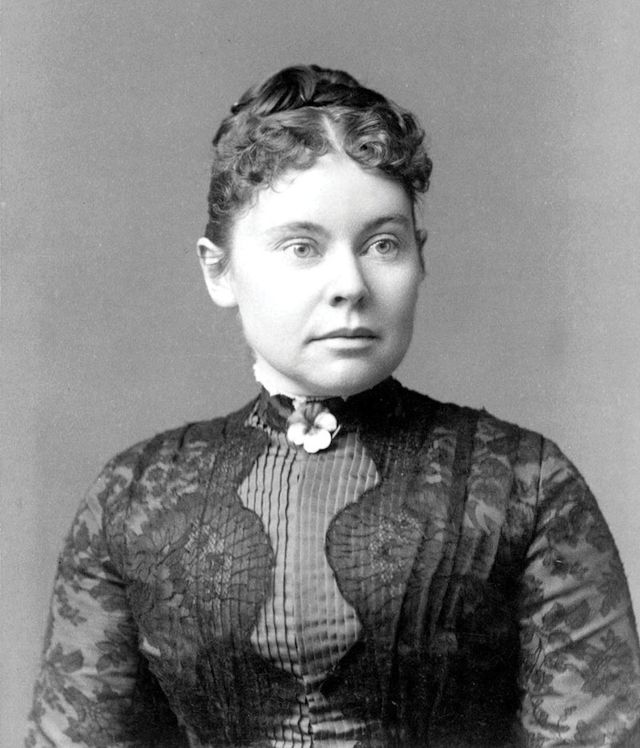
Lizzie Borden was a Massachusetts woman tried and acquitted in 1893 of murdering her father, Andrew, and stepmother, Abby. Netflix’s Monster: The Lizzie Borden Story revisits the case as a scripted drama. Its portrayal is distinct from the historical jury verdict.
Lizzie Borden: history and screen portrayal
| Detail | Record |
|---|---|
| Born | July 19, 1860 |
| Died | June 1, 1927, aged 66 |
| Murders | August 4, 1892, Fall River |
| Trial venue | New Bedford, Massachusetts |
| Verdict | Not guilty, June 20, 1893 |
| Netflix portrayal | Ella Beatty as Lizzie Borden |
The historical case
The Library of Congress research guide dates the murders to August 4, 1892, Borden’s arrest to August 11, and the opening of her trial in New Bedford to June 5, 1893. The jury acquitted her on June 20. The crime occurred in Fall River; the trial took place in New Bedford.
Fall River’s cemetery history brochure records her birth and death dates. She was 32 when the murders occurred and 66 when she died.
What Netflix adapted
Netflix’s September 17, 2026 announcement identifies the production as the fourth installment of Ryan Murphy and Ian Brennan’s Monster anthology. Ella Beatty plays Lizzie, while Vicky Krieps plays Bridget Sullivan, the family’s domestic servant.
The program’s scenes, dialogue and interpretation of relationships are part of a dramatic production. They cannot replace testimony or court records when answering who was convicted. Borden’s acquittal remains the legal outcome regardless of a fictional portrayal.
Life after the trial
Bristol Community College’s Borden household guide describes Lizzie and her sister Emma buying the Fall River home later called Maplecroft after the trial. It also discusses her later use of the name Lizbeth.
For further research, the Fall River Historical Society’s collection guide provides a starting point for photographs and documentary material, including material relating to her later life.
The household behind the famous surname
The Borden case concerns a particular family, rather than the simplified household suggested by the familiar rhyme. Abby was Lizzie’s stepmother. Bristol Community College’s household guide records Andrew’s first marriage to Sarah Anthony Morse and his later marriage to Abby Durfee Gray in 1865.
The guide also identifies Emma as Lizzie’s older sister and Bridget Sullivan as the household’s domestic servant. Emma was away in Fairhaven on the day of the murders. Those relationships matter when following a historical account or comparing it with a cast list in an adaptation.
Andrew’s business interests included local textile mills and banking. The family belonged to the commercial world of Fall River, a setting that helps explain why the deaths attracted such intense local attention. The people in that household had lives and relationships before the case turned their names into cultural shorthand.
The chronology from August 1892 to June 1893
The murders, arrest and trial took place over different stages of the case. The Library of Congress guide establishes August 4 as the date of the deaths, August 11 as the arrest date and June 5 of the following year as the opening of the trial.
This means the trial did not immediately follow the discovery of the bodies. The intervening period belongs to the investigation and preparation of the case. Later retellings can compress that interval for dramatic momentum, but a historical chronology should preserve it.
The guide’s final entry records the June 20 acquittal. That outcome is the essential answer to the legal question in the biography. A viewer may encounter a confident theory on screen, but the jury did not convict Lizzie Borden of either murder.
| Date | Event | Why it matters |
|---|---|---|
| August 4, 1892 | Andrew and Abby Borden were killed | Beginning of the criminal case |
| August 11, 1892 | Lizzie Borden was arrested | An accusation, not a conviction |
| June 5, 1893 | Trial opened in New Bedford | Different city from the crime scene |
| June 20, 1893 | Not-guilty verdict | The established trial outcome |
| After the trial | Lizzie and Emma moved to Maplecroft | A separate home from the murder location |
| June 1, 1927 | Lizzie died | End of a life extending decades beyond the case |
What the archives preserve
The Fall River Historical Society’s Knowlton Papers catalogue describes material from prosecutor Hosea Morrill Knowlton’s personal files. It includes correspondence, trial-exhibit photographs and a scrapbook of newspaper clippings. The society published the collection in 1994.
The inventory demonstrates how different kinds of material survive together. Some entries concern prosecution preparation; others are letters from people offering opinions about the crime. Their presence in an archive does not give every statement the same evidential value.
For example, a document showing what a prosecutor received is evidence that the communication existed. It does not automatically prove the truth of the writer’s theory. The catalogue helps a researcher identify an item, its origin and its place in the collection before interpreting it.
That distinction is especially valuable in a case surrounded by speculation. The historical record contains both official activity and the public reaction to it. A careful account can examine the reaction without mistaking it for a verdict.
Newspaper coverage and the making of a legend
The Library of Congress research guide links to historic newspaper material through Chronicling America. Those newspapers show how readers encountered the arrest and trial at the time. They are also records of the language and presentation used by the press.
A contemporary report can help establish what was said publicly on a particular day. It still needs to be read in context: an allegation, a witness’s account, an editorial judgement and a jury decision are different forms of information.
The endurance of the Borden story shows how easily a memorable name or rhyme can outlast those distinctions. The repeated phrase becomes familiar to people who may never have read an account of the trial. Returning to dates and identifiable records restores the difference between notoriety and a proven criminal finding.
Maplecroft and the life after acquittal
Maplecroft was the French Street home Lizzie and Emma bought after the trial. It was not the Second Street house where Andrew and Abby died. Confusing the two locations turns a later chapter of the sisters’ lives into an inaccurate description of the crime scene.
The Historical Society’s broader Borden collection includes correspondence, personal objects and photographs, among them material associated with Maplecroft. Its guide describes a hand-engraved gold watch and rare photographs that help place a person behind the public legend.
The society also identifies its book Parallel Lives: A Social History of Lizzie A. Borden and Her Fall River as a study drawing on research into her later life and relationships. That wider social history gives researchers a route beyond retellings limited to the day of the murders.
A documented connection with animal welfare
The Animal Rescue League of Fall River’s own history describes a 1913 meeting at Lizzie’s home about the treatment of working horses. Its account connects her support with plans for a barn that could provide care and with the organisation incorporated in 1914.
The League also records bequests from both sisters: $30,000 from Lizzie and $20,000 from Emma. These are specific historical gifts reported by the recipient organisation. They should not be turned into a complete calculation of either sister’s estate.
This chapter does not answer the unresolved historical questions about the murders. It does establish that Borden’s later life included an association with a local charitable organisation. A biography can acknowledge that evidence without using it to prove or disprove a theory about an earlier event.
Watching Monster alongside the historical record
Netflix’s September 2026 Tudum article presents Monster: The Lizzie Borden Story as available to stream. It identifies Ella Beatty’s central role and places the production within the anthology’s fourth instalment. These are production facts supplied by the distributor.
The most useful approach for a viewer is to keep a few questions separate. Who is portrayed by an actor? What does the historical record establish about that person? Which conversations, motivations or relationships belong to the production’s interpretation?
That approach does not prevent enjoying or criticising the drama. It makes clear what sort of claim is being considered. An effective performance can make a character convincing without becoming new evidence about an event in 1892.
Frequently asked questions
Who was Lizzie Borden?
She was a Fall River, Massachusetts, woman accused of killing her father and stepmother in 1892. She was tried in New Bedford the following year and acquitted.
Was Lizzie Borden found guilty?
No. The jury returned a not-guilty verdict on June 20, 1893. Her enduring notoriety and the theories in later adaptations should be distinguished from that trial outcome.
Who were Andrew and Abby Borden?
Andrew was Lizzie’s father, and Abby was her stepmother. Describing both simply as her biological parents would misstate the family relationship.
Who plays Lizzie in Netflix’s Monster?
Netflix identifies Ella Beatty as Lizzie Borden. Its production announcement names Vicky Krieps as Bridget Sullivan, the domestic servant associated with the household.
Was Maplecroft the murder house?
No. Maplecroft was the French Street home the sisters purchased after the trial. The murders occurred at the family’s earlier Second Street residence.
Is Monster a documentary?
No. It is a scripted dramatic adaptation. Its scenes and interpretations can be compared with historical sources, but they do not replace testimony, documents or the jury’s verdict.
Where can I research the case?
The Library of Congress guide, Fall River Historical Society collections and the Bristol Community College household guide provide useful starting points. Each offers a different route into the documented history.

Thomas Andrew is the founder of Odubio.com, a digital platform sharing inspiring biographies, news, and stories about global icons and achievers.