
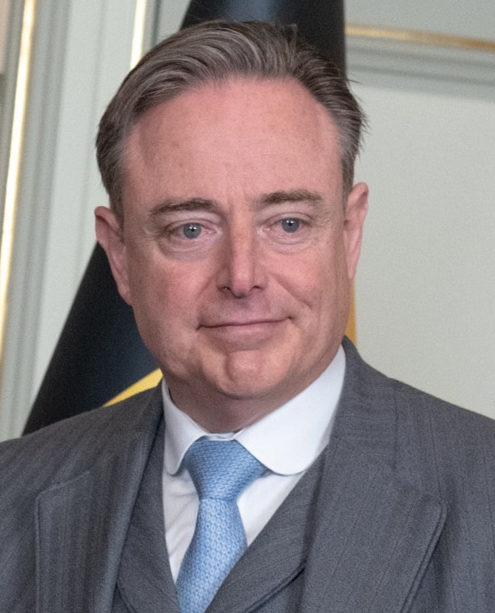
Bart De Wever became Belgium’s prime minister on February 3, 2025, after more than two decades leading the New Flemish Alliance, known as N-VA. A historian by training and a longtime mayor of Antwerp, he became the first Flemish nationalist to head Belgium’s federal government.
His career connects a regional political project with the practical demands of governing a multilingual country. As of November 24, 2026, he remains prime minister amid difficult budget negotiations. His November 23 warning about a year-end deadline is the latest development in an unresolved dispute, rather than evidence that a budget agreement has been reached.
Bart De Wever at a glance
| Detail | Information |
|---|---|
| Born | December 21, 1970 |
| Age | 55 as of November 24, 2026 |
| Country | Belgium |
| Academic background | History studies at Antwerp and KU Leuven |
| Party | New Flemish Alliance, or N-VA |
| N-VA chairman | 2004–2025 |
| Serving mayor of Antwerp | January 2013–February 2025 |
| Prime minister | Since February 3, 2025 |
| Coalition partners | N-VA, MR, Les Engagés, Vooruit and CD&V |
History studies before full-time politics
De Wever studied history at Antwerp and KU Leuven and worked as a researcher and academic staff member at KU Leuven from 1995 to 2001. He subsequently left that academic path to concentrate on politics.
The prime minister’s official biography records that background and his later service at municipal, Flemish and federal levels. It also describes his interest in ancient Rome and his writing on identity and politics. His public style has often drawn on historical references.
Academic work and political leadership are different occupations. Historical study can provide a framework for thinking about institutions and identity; elected office requires negotiating contemporary decisions with people who may disagree strongly about both. That tension is visible throughout his career.
Building the New Flemish Alliance
N-VA emerged in 2001 after the breakup of the Volksunie, the earlier Flemish nationalist party. De Wever was among its founders and became chairman in 2004. He remained in that position until 2025.
The party’s historical account describes its roots and development. It presents the movement from the party’s own perspective, so its praise of achievements should be distinguished from independently documented dates and election results.
N-VA advocates a major reorganization of Belgium’s institutional arrangements through confederalism. In broad terms, that position seeks to place more authority with the constituent entities and make shared arrangements depend on agreement. It is a political program, rather than a description of Belgium’s existing constitutional structure.
For De Wever, the challenge became translating that regional political appeal into influence at different levels of government. Leading a party and leading a national coalition require overlapping but different kinds of compromise.
Public profile and party strategy
A Belga profile before the 2024 election describes De Wever’s central role as N-VA’s strategist. It also notes the wider recognition he gained after appearing on the television quiz show De Slimste Mens in 2009.
That combination of party organization and public visibility helped make him a familiar figure beyond parliamentary debates. The profile distinguishes his gradualist approach to shifting powers toward the regions from the approach of Vlaams Belang.
At the time of that report, he had preferred his roles as party leader and Antwerp mayor over becoming Flemish minister-president. His later decision to become federal prime minister therefore represented a significant change in the kind of executive responsibility he was willing to assume.
Antwerp mayor and the move to federal office
De Wever served as Antwerp’s mayor from January 2013 until February 2025. He retained the title of titular mayor after moving to federal government. That title should not be confused with continuing to perform the same daily mayoral duties he held before the premiership.
Municipal leadership provided an executive setting distinct from his party chairmanship. A city government deals with residents, services and local administration, while a federal coalition must coordinate national policy across several parties and political constituencies.
His move to Brussels also changed the balance of his career. Rather than influencing national negotiations mainly through party leadership, he became responsible for holding the federal executive together. The distinction is particularly visible in the budget disputes that followed.
Forming the Arizona coalition
Following the June 2024 election, federal negotiations continued for months. On January 31, 2025, the presidents of five parties reached an agreement that still required the parties’ approval and decisions on ministerial responsibilities.
Belga’s report from that date identifies the participants as N-VA, MR, Les Engagés, CD&V and Vooruit. The discussions covered budget measures, socioeconomic reforms and other policy questions.
The government was sworn in on February 3. Known as the Arizona coalition, it joined parties with different political traditions and language constituencies. The agreement made De Wever prime minister, but it did not remove the differences among the partners.
Coalition formation creates a shared program from positions that do not fully coincide. Subsequent decisions test whether that initial compromise remains workable when specific spending and taxation choices affect each party’s voters.
What the prime minister’s job involves
Belgium’s official explanation of the premiership describes the prime minister as head of government, coordinating its activities and chairing the Council of Ministers. The role includes mediation among ministers from different coalition parties.
This is why the size of a party’s electoral support is not enough to guarantee that its leader can implement every proposal. A coalition prime minister needs continued agreement from partners and parliamentary support for the government’s work.
The position also differs from that of the monarch. The king has a role in government formation and political consultations, while ministers carry responsibility for policy and administration. Events involving the palace should therefore be read within the wider process of maintaining a functioning government.
Budget tensions and the November 2026 crisis
De Wever offered his resignation on November 2, 2026, after negotiations over a deficit-cutting budget stalled. AFP reported that King Philippe initially held his decision while the political discussions continued.
The king subsequently rejected the resignation and urged the governing parties to resume negotiations. Associated Press reporting on November 6 described the dispute and the difficulty of securing agreement within the five-party government.
The disagreement concerns how to improve public finances and how the burden should be distributed. A headline savings target can conceal significant differences over spending, taxes and the effect on households. Agreement on reducing a deficit does not automatically mean agreement on each measure used to do it.
On November 23, De Wever again met King Philippe without a budget deal. AFP’s report carried by TV5MONDE described his warning that the coalition needed an agreement before the end of the year. It also recorded protests against austerity and the continued dispute over the proposed balance of measures.
The Brussels Times with Belga reported that he would convene the leaders of the five governing parties for another attempt. His warning concerned the government’s ability to continue if it entered the new year without agreement.
As of this update, the negotiations remain unresolved. The year-end statement is a political deadline, not an announcement that his government has already fallen. Further developments will need to be assessed against official decisions and subsequent reporting.
Leaving the N-VA chairmanship
Becoming prime minister also brought a change inside N-VA. Valerie Van Peel was elected party president on April 26, 2025, succeeding De Wever after his long tenure.
The change separates leadership of the party organization from leadership of the federal government. De Wever remains strongly associated with N-VA’s direction, but describing him as its current chairman would overlook that transition. His prime ministerial responsibilities also require representing a coalition wider than his own party.
Career timeline
| Period | Milestone | Context |
|---|---|---|
| 1995–2001 | History research at KU Leuven | Academic work before full-time politics |
| 2001 | N-VA founded | Successor movement following Volksunie’s breakup |
| 2004–2025 | N-VA chairman | More than two decades of party leadership |
| 2013–2025 | Mayor of Antwerp | Municipal executive experience |
| January 2025 | Five-party agreement reached | Final stage of federal formation talks |
| February 2025 | Became prime minister | First Flemish nationalist in the office |
| April 2025 | Van Peel succeeded him as party president | Party and government leadership separated |
| November 2026 | Budget crisis and year-end warning | Coalition negotiations continuing |
Frequently asked questions
Who is Bart De Wever?
He is Belgium’s prime minister, a former Antwerp mayor and the longtime former chairman of N-VA.
How old is Bart De Wever?
He is 55 as of November 24, 2026. He was born on December 21, 1970.
What did he study?
He studied history at Antwerp and KU Leuven and worked in academic research before concentrating on politics.
When did he become prime minister?
He took office on February 3, 2025, following the formation of a five-party federal coalition.
Is he still N-VA chairman?
No. Valerie Van Peel succeeded him as party president in April 2025.
What is the Arizona coalition?
It is the governing alliance of N-VA, MR, Les Engagés, Vooruit and CD&V formed in 2025.
Did his November 2026 resignation offer end the government?
No. The king rejected the offer, and negotiations continued. On November 23, De Wever warned that a budget agreement was needed before year-end.

Thomas Andrew is the founder of Odubio.com, a digital platform sharing inspiring biographies, news, and stories about global icons and achievers.