
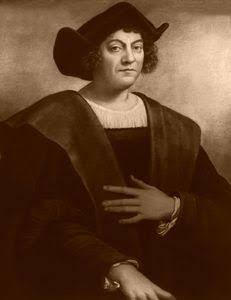
Christopher Columbus was a sailor and explorer who led four voyages from Spain across the Atlantic Ocean between 1492 and 1504. He was looking for a sea route to Asia, and he instead began lasting contact between Europe and the Americas. People are still searching for his story because of questions about where he was born, where he is buried, and how he should be remembered. This article covers his life, his voyages, and the debates that remain.
Latest Update: October 6, 2026
As of October 6, 2026, Columbus Day will be observed as a U.S. federal holiday on Monday, October 12, 2026, the second Monday of October. Many states, cities, and communities mark Indigenous Peoples’ Day instead or in addition, so what is observed depends on where you live. Spain also marks October 12 as its national holiday.
The science about Columbus has also moved. In October 2024, a Spanish team led by José Antonio Lorente of the University of Granada said DNA tests confirmed that remains in Seville Cathedral are those of Columbus. Lorente said the result was “almost absolutely reliable,” but his team could not test remains kept in the Dominican Republic. Euronews reported in April 2026 on a new study suggesting a genomic link to northern Spanish nobility, which it described as limited evidence. As of today, where he was born has not been settled.
Who Was Christopher Columbus?
Columbus was a navigator who persuaded the Spanish monarchs Isabella I and Ferdinand II to pay for an Atlantic voyage. He was named Admiral of the Ocean Sea and governor of the lands he claimed. His four voyages brought Europeans, animals, plants, and diseases to the Caribbean and the nearby coasts. Historians describe him both as a skilled seaman and as a harsh governor whose colonies caused great suffering for Indigenous people.
Background / Early Life
The traditional account is that he was born in Genoa, in what is now Italy, between August 25 and October 31, 1451. Most historians accept Genoa, and his father is usually named as Domenico Colombo, a wool weaver, and his mother as Susanna Fontanarossa. His brothers included Bartholomew and Diego, who later worked with him in the Americas. The Spanish DNA documentary of 2024 claimed a Western European Sephardic Jewish origin, which many historians rejected and which was not published as a peer-reviewed study at the time. The evidence on his birthplace is still debated.
He went to sea young. He later lived in Portugal, where he learned navigation and map-making and studied Atlantic winds and currents. Records of his schooling are thin, and he is generally described as self-taught.
Career Path
Winning Royal Support
Columbus believed he could reach Asia by sailing west. He underestimated the distance. After the Portuguese crown turned him down, Ferdinand and Isabella agreed in April 1492 to support him and promised titles and a share of the profits.
First Voyage (1492–1493)
He left Palos, Spain, on August 3, 1492, with three ships: the Niña, the Pinta, and the Santa María. His crew sighted land in the Bahamas on October 12, 1492. The Santa María ran aground off Hispaniola on Christmas 1492, and he left a small settlement called La Navidad before returning to Spain.
Second Voyage (1493–1496)
He returned with a large fleet and settlers to colonize Hispaniola. Under his rule, Taíno people were forced to pay tribute and work, and some were shipped to Spain as slaves. Disease, violence, and forced labor devastated the Taíno population over the following decades.
Third Voyage (1498–1500)
He reached the South American mainland near what is now Venezuela. Complaints about his governing led the Crown to send an official, Francisco de Bobadilla, who arrested Columbus and his brothers in 1500 and sent them to Spain in chains. The monarchs freed him but removed him as governor.
Fourth Voyage (1502–1504)
He explored the coast of Central America and was stranded in Jamaica for about a year before being rescued. He returned to Spain in 1504, ill and in dispute with the Crown over what he was owed.
Christopher Columbus Age
He was born in 1451 and died on May 20, 1506, in Valladolid, Spain, when he was about 54. His exact birth date is not known. If he were alive on October 6, 2026, he would be about 575 years old.
Family
He married Filipa Moniz Perestrelo, a Portuguese noblewoman, around 1479, and they had a son, Diego. After Filipa died, he had a relationship with Beatriz Enríquez de Arana in Córdoba, and their son was Hernando, who later wrote a biography of his father. Diego became governor of Hispaniola and his descendants held titles in Spain for generations. His brothers Bartholomew and Diego also served in the colonies.
Religion, Height, and Net Worth
He was a devout Catholic and described his voyages in religious terms. His height and appearance are known only from later descriptions and portraits, and no authentic portrait from his lifetime is known, so I am not giving a height. Net worth is not a meaningful measure for a 15th-century figure, though he and his heirs spent decades in legal disputes with the Crown over the share of profits he had been promised.
Death and Burial
He died in Valladolid in 1506. His remains were moved several times: to Seville, then to Santo Domingo in 1542, to Havana in 1795, and back to Seville in 1898. The Dominican Republic also claims to hold his remains after a lead casket was found in Santo Domingo in 1877. The 2024 Granada study said the Seville bones are his, and Lorente also said that remains are “not all in Seville, nor all in the Dominican Republic.”
Legacy and Controversy
Columbus is remembered for opening sustained contact between the Old World and the New, which began what historians call the Columbian Exchange, the movement of crops, animals, people, and diseases across the Atlantic. He is also criticized for the treatment of Indigenous people under his rule. In the United States, Columbus Day became a federal holiday in 1937, and the debate over statues, holidays, and Indigenous Peoples’ Day continues. Historians often point out that Columbus did not discover a land that was already home to millions of people, and that Norse explorers had reached North America centuries earlier.
Quick Table
| Full Name | Christopher Columbus (Cristoforo Colombo; Cristóbal Colón) |
|---|---|
| Born | 1451, traditionally Genoa (exact date and origin debated) |
| Died | May 20, 1506, Valladolid, Spain (aged about 54) |
| Occupation | Navigator, explorer, colonial governor |
| Known For | Four Spanish-sponsored voyages to the Americas, 1492 to 1504 |
| Sponsors | Isabella I of Castile and Ferdinand II of Aragon |
| Parents | Domenico Colombo and Susanna Fontanarossa (traditional) |
| Spouse | Filipa Moniz Perestrelo (m. about 1479) |
| Children | Diego (with Filipa); Hernando (with Beatriz Enríquez de Arana) |
| Religion | Catholic |
| Burial | Seville Cathedral (disputed with the Dominican Republic) |
Reader Questions
Who was Christopher Columbus?
Christopher Columbus was a navigator who led four Spanish-sponsored voyages across the Atlantic from 1492 to 1504, starting lasting European contact with the Americas.
When and where was Christopher Columbus born?
Most historians say he was born in 1451 in Genoa, Italy. His exact birth date and origin are debated, and recent DNA studies have not settled the question.
When did Columbus reach the Americas?
His first voyage reached the Bahamas on October 12, 1492.
How many voyages did Columbus make?
He made four voyages: in 1492 to 1493, 1493 to 1496, 1498 to 1500, and 1502 to 1504.
How did Christopher Columbus die?
He died on May 20, 1506, in Valladolid, Spain. Historians usually say he was ill and unhappy with the Crown at the end of his life.
Where is Christopher Columbus buried?
A 2024 DNA study found that remains in Seville Cathedral are his, but the Dominican Republic also claims some of his remains.
Why is Columbus controversial?
His rule in Hispaniola involved forced labor and enslavement of the Taíno people, and European contact led to devastating loss of Indigenous life.
Wrap-Up
Columbus’s four voyages changed world history, but they did not bring the outcome he expected. He died believing he had reached Asia, and his achievements are now judged alongside the harm his colonies caused.
As of October 6, 2026, Columbus Day will be observed on October 12, scientists agree that the Seville remains are his, and the question of where he was born remains open.
Disclaimer
This article is based on publicly available historical sources and news reports checked on October 6, 2026. Many details of Columbus’s life are debated by historians, and uncertain points are noted as such. Details such as his birthplace cannot be fully verified.

Thomas Andrew is the founder of Odubio.com, a digital platform sharing inspiring biographies, news, and stories about global icons and achievers.