
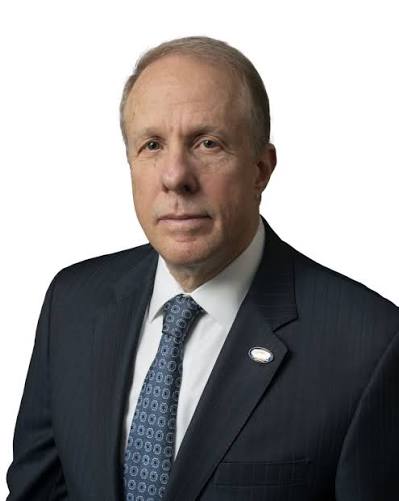
Steve Feinberg is one of the most powerful officials in the U.S. government right now — and also one of the least known faces in Washington. He’s the No. 2 official at the Pentagon, a billionaire who built one of the largest private equity firms on earth, and a man who has spent his entire career deliberately avoiding cameras. This profile covers who he is, what he does, why he’s in the news today, and what the gold-bar scandal involving a former CIA officer has to do with him.
Quick Fact Check: Steve Feinberg has not been charged with any crime. The FBI confirmed he is not under investigation. His name appears in news coverage because he was interviewed by the FBI as part of a separate probe into former CIA officer David Rush — a man Feinberg had recommended for sensitive government work.
Background: Who Is Steve Feinberg?
Stephen Andrew Feinberg is a 66-year-old American businessman and government official from New York. He co-founded Cerberus Capital Management in 1992 with $10 million and grew it into a firm managing roughly $70 billion in assets by 2026. Cerberus takes its name from the three-headed dog in Greek mythology that guards the gates of the underworld — a name that tells you something about how Feinberg thinks about protecting assets.
Most people had never heard of him before his second stint in government. He’s well known inside Wall Street and Washington power circles, but he has actively avoided public attention throughout his career. There’s a famous internal memo he once sent to Cerberus staff warning that anyone who allowed his photograph to appear in the press alongside a picture of his apartment would be fired on the spot. That level of secrecy defines the man.
People are searching for him now because of two things happening at the same time: reports that the White House has been quietly reviewing candidates to replace him as Deputy Defense Secretary, and new reporting that he was interviewed by the FBI in connection with a high-profile criminal case involving a CIA officer named David Rush who was arrested with 303 gold bars worth roughly $40 million stored at his home.
Latest Update
As of September 10, 2026
As of today, September 10, 2026, Steve Feinberg is still serving as Deputy Secretary of Defense, though his position is under genuine pressure on two separate fronts.
The first is an internal White House review that Reuters reported in early September 2026. Three sources confirmed to the outlet that the White House had been reviewing potential replacements for Feinberg since at least June 2026 and was sounding out senior senators on whether new nominees would pass confirmation. The White House called the report “fake news,” and Feinberg has not been publicly asked to resign. No replacement has been named.
Unconfirmed: The reason the White House is reviewing replacements has not been officially explained by any administration spokesperson. Reports link it to Pentagon tensions over munitions transparency during the U.S.-Iran conflict, but no official confirmation of that specific reason has been given as of today.
The second — and more explosive — story broke on September 10, 2026, in NBC News. Feinberg was interviewed by the FBI as part of its criminal investigation into David Rush, a 17-year CIA veteran who was arrested in May 2026 after FBI agents raided his home in Ashburn, Virginia, and found 303 one-kilogram gold bars (valued at over $40 million), approximately $2 million in cash, and more than 30 luxury watches. Rush is accused of obtaining gold and foreign currency from the CIA by claiming it was for work-related operational expenses, then keeping it for personal use. He also faces charges of falsifying his education and military credentials.
Feinberg’s connection to Rush: Feinberg had recommended Rush for sensitive government assignments and praised his performance to senior CIA officials. The two men reportedly first crossed paths when Feinberg chaired the President’s Intelligence Advisory Board during Trump’s first term, and Rush was a CIA liaison on classified programs. Feinberg later requested that Rush be assigned to a sensitive nuclear submarine program at the Pentagon. The FBI interviewed Feinberg as part of its investigation into Rush’s activities. The FBI has clearly stated that Feinberg is not under investigation and has not been accused of any wrongdoing. There is no indication he knew about Rush’s alleged theft while recommending him. Pentagon spokesman Sean Parnell called descriptions of the two men having a “close professional relationship” — a phrase used in early reports — “completely false and embellished.”
What is confirmed: Feinberg was interviewed by the FBI. He is not under investigation. He is not charged with anything. He recommended David Rush for government roles. Rush is charged with theft. President Trump has been briefed on the Feinberg-Rush connection.
Full Profile
| Steve Feinberg — Quick Facts | |
|---|---|
| Full Name | Stephen Andrew Feinberg |
| Date of Birth | March 29, 1960 |
| Age | 66 (as of September 2026) |
| Place of Birth | The Bronx, New York City, USA |
| Nationality | American |
| Religion | Jewish |
| Spouse | Gisela (née Sanchez) Feinberg |
| Children | 3 (names not publicly disclosed) |
| Education | Princeton University, B.A. in Politics (1982) |
| Hometown | Spring Valley, New York (raised); Manhattan / Greenwich, CT (adult) |
| Net Worth | Estimated $2 billion+ (per financial disclosures) |
| Current Role | 36th U.S. Deputy Secretary of Defense (since March 17, 2025) |
| Company Founded | Cerberus Capital Management (1992) |
| Political Affiliation | Republican |
Family and Early Life
Feinberg was born on March 29, 1960, in the Bronx, New York, to a Jewish family. His father, Martin, worked as a steel salesman. The family later moved to Spring Valley, New York, a suburban town in Rockland County, where Feinberg grew up. He was, by accounts from that period, an exceptionally focused student. He became a nationally ranked chess player while still in high school and also played bridge and tennis competitively — a combination that hints at how he approaches problems: strategically, with patience, and with a preference for thinking several moves ahead.
He enrolled at Princeton University, where he continued playing tennis and was a member of Army ROTC. He left ROTC before graduating — the reasons for that aren’t publicly documented — and earned his bachelor’s degree in Politics from Princeton in 1982. He was the kind of person who didn’t draw attention to himself even on campus. No major student leadership roles are publicly associated with his Princeton years.
Career Path
| Period | Role / Milestone |
|---|---|
| 1982 | Started as a trader at Drexel Burnham Lambert, New York |
| Mid-1980s | Moved to Gruntal & Co. as a securities trader |
| 1992 | Co-founded Cerberus Capital Management with William L. Richter; started with $10 million under management |
| 1999 | Hired former Vice President Dan Quayle as chairman of Cerberus Global Investment |
| 2006 | Hired former Treasury Secretary John Snow as Cerberus chairman |
| 2007 | Cerberus acquired Chrysler in a $7.4 billion deal; the auto company later went bankrupt in 2009 |
| 2010–2020 | Cerberus owned DynCorp, a major private security and military contractor with the U.S. government |
| May 2018–Jan 2021 | Chair, President’s Intelligence Advisory Board (Trump first term) |
| Aug 2018–Jan 2021 | Chair, Intelligence Oversight Board (Trump first term) |
| March 17, 2025–present | 36th U.S. Deputy Secretary of Defense; confirmed by Senate 59–40 |
Cerberus under Feinberg became famous for buying distressed companies, restructuring them, and selling them for profit. The firm’s portfolio has spanned auto manufacturers, grocery chains, financial services, and — most controversially — major defense and national security contractors. By 2026, Cerberus managed roughly $70 billion in assets across its funds and accounts. That scale of defense-sector involvement is also why Feinberg’s transition to the Pentagon raised immediate conflict-of-interest questions from ethics watchdog groups, though he has claimed to have divested from Cerberus. His 2026 ethics filings show he retains a contractual relationship with Cerberus for administrative services including accounting, healthcare, and tax-related purposes.
Age
Steve Feinberg is 66 years old, born March 29, 1960. He turned 66 in March 2026.
Religion
Feinberg was born into a Jewish family. He has not spoken publicly about religious practice or observance.
Spouse and Partner
Feinberg is married to Gisela Sanchez Feinberg. The two have three children together. Their children’s names have not been made public, consistent with Feinberg’s general approach to keeping his personal life out of the press. The family has maintained residences on Manhattan’s Upper East Side and in Greenwich, Connecticut.
Net Worth
Financial disclosure documents filed in connection with his Senate confirmation list Feinberg’s minimum assets at $2 billion, making him the wealthiest official in the Trump administration by a wide margin. Some estimates place the figure higher given Cerberus’s growth trajectory and his ownership stake history, but the disclosure-based floor of $2 billion is the most formally documented figure. His wealth comes almost entirely from Cerberus Capital Management.
Parents
His father, Martin Feinberg, was a steel salesman. His mother’s name has not been publicly documented in any major source. Both parents raised him in the Bronx before the family relocated to Spring Valley, New York.
Height
Feinberg’s exact height is not documented in public sources. During his 2025 Senate confirmation hearings, Vice President Vance did not reference his stature. No verifiable figure exists — this detail is unconfirmed.
Education
Feinberg attended Princeton University, graduating in 1982 with a Bachelor of Arts in Politics. He was a member of the Army ROTC program at Princeton but did not complete it before graduation. No postgraduate degrees have been publicly documented.
Hometown and State of Origin
Born in the Bronx, New York, and raised in Spring Valley, New York. As an adult he has been primarily based between Manhattan and Greenwich, Connecticut.
Official Social Media
Steve Feinberg has no known public social media accounts. Consistent with his decades-long approach to privacy, he maintains no verified presence on X (Twitter), LinkedIn, or any other platform. Official statements reach the public through the Pentagon press office.
Reader Questions (FAQ)
Who is Steve Feinberg and what does he do?
Steve Feinberg is a 66-year-old American billionaire and government official who currently serves as the 36th U.S. Deputy Secretary of Defense — the second most powerful position at the Pentagon, after the Defense Secretary. He was appointed by President Donald Trump and confirmed by the Senate in March 2025. Before entering government, he was the co-founder and longtime CEO of Cerberus Capital Management, one of the largest private equity firms in the world with around $70 billion in assets under management.
Is Steve Feinberg under FBI investigation?
No. The FBI has clearly stated that Steve Feinberg is not under investigation. He was interviewed by the FBI as part of its criminal probe into former CIA officer David Rush — a man Feinberg had recommended for sensitive government assignments — but Feinberg has not been accused of any wrongdoing. There is no indication he was aware of Rush’s alleged theft while recommending him for roles.
What is Steve Feinberg’s connection to the CIA gold bar scandal?
Former CIA officer David Rush was arrested in May 2026 after FBI agents found 303 gold bars (worth over $40 million), $2 million in cash, and more than 30 luxury watches at his Virginia home. Rush is accused of fraudulently obtaining the gold and foreign currency from the CIA under the guise of operational expenses. Feinberg’s name entered the story because he had recommended Rush for sensitive Pentagon roles and the two men had a professional connection going back to Feinberg’s time chairing the President’s Intelligence Advisory Board during Trump’s first term. The Pentagon has disputed characterizations of their relationship as “close.”
What is Cerberus Capital Management?
Cerberus Capital Management is a New York-based private equity and alternative investment firm that Feinberg co-founded with William L. Richter in 1992, starting with $10 million under management. By 2026, the firm manages approximately $70 billion in assets. Cerberus is known for buying struggling companies, restructuring them, and selling them — its portfolio has included Chrysler, grocery chain Albertsons, and major national security contractors like DynCorp. The firm is named after the three-headed dog from Greek mythology that guards the underworld.
What is Steve Feinberg’s net worth?
Based on financial disclosure documents filed for his Senate confirmation, Feinberg’s assets total at least $2 billion — making him the richest official in the Trump administration. The exact figure is higher than disclosures capture, because Senate disclosure rules don’t require listing the full market value of private equity stakes with the same precision as publicly traded assets. Independent estimates have ranged from $1.5 billion to over $2 billion.
Is Steve Feinberg being replaced at the Pentagon?
As of September 10, 2026, Feinberg remains in his role as Deputy Defense Secretary. Reuters reported in early September 2026 that the White House had been reviewing potential replacement candidates and sounding out senators since at least June 2026. The White House called that report “fake news.” No successor has been announced, and no official request for Feinberg’s resignation has been made public.
Was Steve Feinberg ever involved with intelligence agencies before becoming Deputy Defense Secretary?
Yes. During Trump’s first term, Feinberg was appointed in May 2018 to chair the President’s Intelligence Advisory Board — a body of non-government appointees that evaluates U.S. intelligence operations and reports findings directly to the president. He also chaired the Intelligence Oversight Board from August 2018 to January 2021. Both roles gave him deep access to sensitive intelligence community operations and personnel, which is the context in which he reportedly met David Rush.
Does Steve Feinberg have a conflict of interest at the Pentagon given Cerberus’s defense contracts?
This question has been raised by ethics watchdog groups and opposition researchers since his nomination. Cerberus owned DynCorp — one of the largest U.S. defense and security contractors — from 2010 to 2020, and Cerberus ranked as the 25th-largest U.S. defense contractor as of 2019, receiving approximately $1.9 billion in federal contract awards. Feinberg claims to have divested from Cerberus upon taking office, but his 2026 ethics filings show he retains a contractual relationship with the firm for accounting, healthcare, and tax services — an unusual arrangement that ethics monitors have flagged as a potential ongoing tie.
Wrap-Up
Steve Feinberg spent decades building enormous wealth and influence while making sure almost nobody outside Wall Street and Washington knew his name. That changed the moment he became the No. 2 official at the largest military establishment on earth. The job makes you visible whether you want to be or not — and in September 2026, he is visible in ways he certainly didn’t plan for. A CIA officer he vouched for has been charged with one of the more surreal financial crimes in recent memory. The White House is reportedly quietly testing the waters on who might replace him. And the Epstein document releases earlier in 2026 contain his name in a context that remains, as of this writing, unexplained by any credible investigation.
None of that means Feinberg has done anything wrong. The FBI has been explicit: he is not under investigation. But the pattern of a very private, very powerful man finding himself entangled — repeatedly and by association — in the most chaotic episodes of the Trump era is a story worth following. He came from modest origins in the Bronx, became a chess champion in a suburban New York high school, went to Princeton, and built a firm that managed tens of billions by buying things other people considered broken and fixing them. Whether that skill set is what the Pentagon needs right now, or whether the controversies around him will shorten his tenure, is an open question as of today.
Watch This Space: Final toxicology and legal proceedings in the David Rush case are still pending. Any new charges in that case, or any official White House announcement about Pentagon leadership changes, could move this story significantly. Check back for updates.

Thomas Andrew is the founder of Odubio.com, a digital platform sharing inspiring biographies, news, and stories about global icons and achievers.